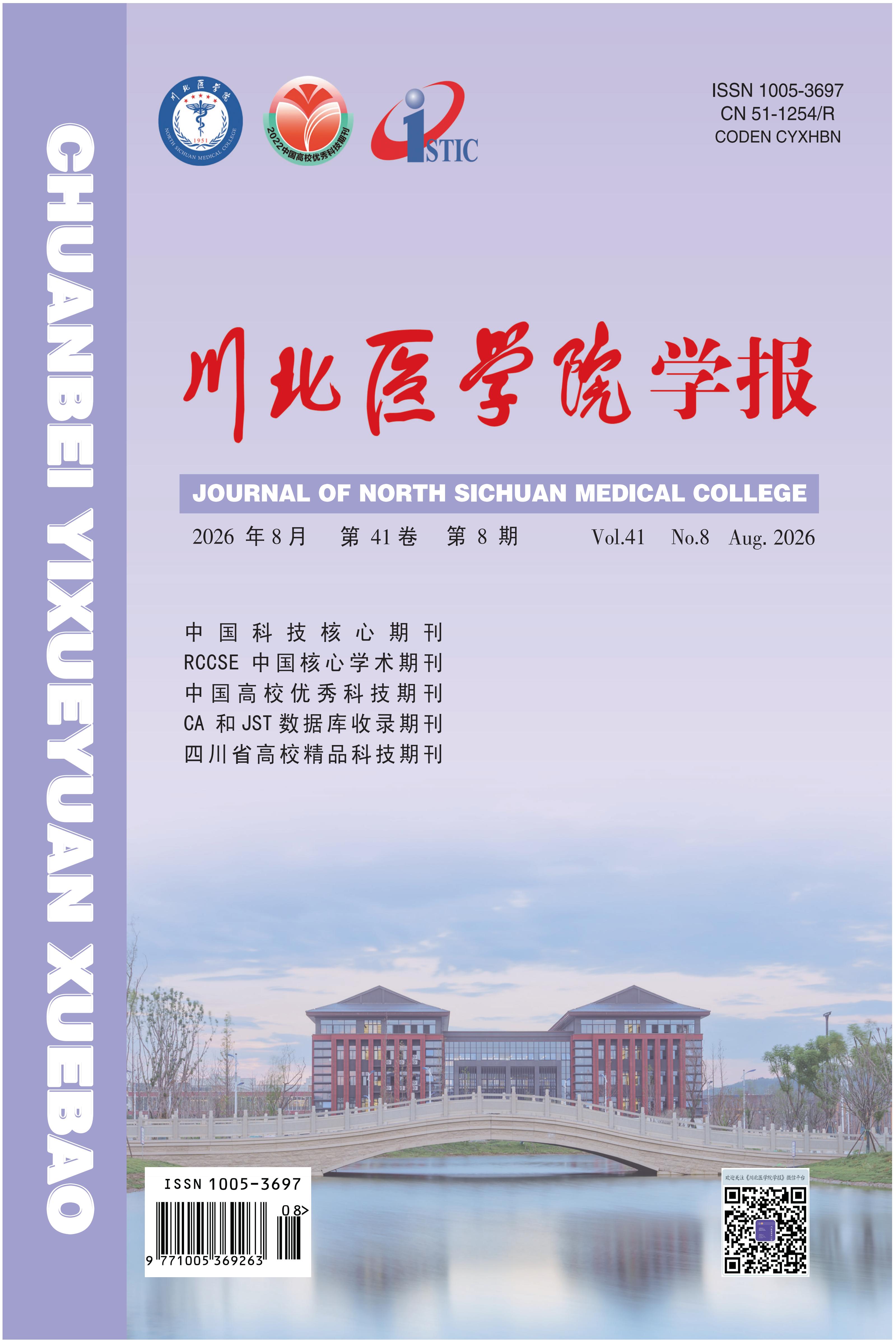
Editor in chief:Dai Rongyang
Deputy Editor-in-Chief:Li Zhi
Governed by:The Education Department of Sichuan Province
Sponsored by:North Sichuan Medical College
Phone:0817-2242637
Email:xuebaocby@126.com
ISSN1005-3697
CN51-1254/R
 NewsDownload Section
Zeng Zhu; Yuan Qian; Zhu Sichong; Tang Wenjun; Huang Yunling; Chen Juan
2026, 41(5):513-520+528. DOI: 10.3969/j.issn.1005-3697.2026.05.001
Abstract:Objective: To investigate the effect of Shenlingbaizhu powder (SBP) on cigarette smoke-induced chronic obstructive pulmonary disease (COPD) in mice. Methods: 24 male BALB/c mice were randomly divided into four groups: control group, COPD group, low-dose SBP group (L-SBP group), and high-dose SBP group (H-SBP group). A COPD mouse model was established by combined exposure to lipopolysaccharide (LPS) and cigarette smoke (CS). After modeling, the L-SBP and H-SBP groups were administered SBP via oral gavage at doses of 1.72g/kg and 3.44g/kg, respectively, while the control and COPD groups received equal volumes of normal saline. Treatment continued for 8 weeks. After treatment, hematoxylin-eosin (HE) staining, Masson staining, and immunohistochemistry were used to observe pathological changes in lung tissue. Enzyme-linked immunosorbent assay (ELISA) was used to measure serum levels of tumor necrosis factor-α (TNF-α), interleukin-1β (IL-1β), and interleukin-6 (IL-6). Transcriptomic sequencing (RNA-seq) was performed to identify differentially expressed genes (DEGs), followed by gene set enrichment analysis (GSEA), gene ontology (GO) functional analysis, and Kyoto Encyclopedia of Genes and Genomes (KEGG) pathway analysis. Western blot (WB) was used to validate the expression levels of key pathway proteins in lung tissue. Results: SBP significantly alleviated the pathological features of COPD induced by CS/LPS in mice. Furthermore, SBP treatment reduced the expression of Caspase-3 and α-SMA proteins and increased Ki67 protein levels. SBP also decreased serum levels of TNF-α, IL-1β, and IL-6, with more pronounced effects at the high dose. Transcriptomic analysis revealed that SBP treatment notably influenced the Rap1 signaling pathway. SBP up-regulated the expression of key proteins in the Rap1 pathway, including Rap1, HGF, and Angpt2. Conclusion: SBP inhibits the inflammatory response in COPD by activating the Rap1 signaling pathway.
Ma Jiaxue; Ma Xiumin; Su Zhaoquan; Kong Weina; Dong Lingling; Li Dewei; Wei Xuemei
2026, 41(5):521-528. DOI: 10.3969/j.issn.1005-3697.2026.05.002
Abstract:Objective: To investigate the phenotype and functional changes of double negative T cells (DNT) in rats with acute high altitude pulmonary edema induced by hypobaric hypoxia, and to explore the potential of DNT cells as treatment or relief for high altitude pulmonary edema. Methods: Normoxic control (NC) and hypobaric hypoxia (HH) groups were established. The proportion, phenotype (CD44, CD62L) and function (IFN-γ, TNF-α, IL-4, IL-10) of DNT cells in lung tissues of rats in NC and HH group were analyzed by flow cytometry. The HH group and HH + TNF-α group were established, and the effects of TNF-α on the differentiation, phenotype and function of DNT cells in lung tissue and spleen of hypobaric hypoxia rats were further analyzed by flow cytometry. Finally, the potential of DNT cell therapy for HAPE was analyzed by adoptive transfer of DNT cells. Results: The proportion of DNT cells in lung tissue of rats in HH group was (1.43 ± 0.20)%, which was statistically significant compared with that in NC group (1.75 ± 0.28)% (P < 0.05). Further detection showed that there was no significant difference in DNT cell phenotype (CD44, CD62L) and some cytokines (IFN-γ, TNF-α, IL-4) between the HH group and the NC group (P > 0.05). However, the level of IL-10 of DNT cells in NC group (2.29 ± 0.20)% was higher than that in NC group (1.57 ± 0.22)% (P < 0.05). By injecting TNF-α into rats in HH group, it was found that the expression level of CD44 in DNT cells in the lungs of HH + TNF-α group (36.22 ± 2.44) was higher than that of HH group (29.75 ± 3.29) (P < 0.05). However, there were no significant differences in DNT cell proportion, CD62L expression and cytokine levels (IFN-γ, TNF-α, IL-4 and IL-10) in lung and spleen between the two groups (P > 0.05). Furthermore, the degree of lung injury in HAPE rats was alleviated by adoptive transfer of DNT cells. Conclusion: Hypobaric hypoxia inhibits DNT cell differentiation and promotes IL-10 secretion, which is not regulated by TNF-α. When compared with CD4? and CD8? T cells, DNT cells secret lower levels of IFN-γ and TNF-α, and higher levels of IL-4 and IL-10 under hypobaric and hypoxia conditions. Moreover, the adoptive transfer of DNT cells alleviated HAPE to a certain extent. These results suggest that DNT cells have the potential to reduce inflammation and relieve pulmonary edema.
Xu Yuzhu; Luo Weigang; Zhang Guisong; Liu Cuicui; Hu Xiaokai; Jia Yanan; Wang Zeyi; Ren Huiling
2026, 41(5):529-534. DOI: 10.3969/j.issn.1005-3697.2026.05.003
Abstract:Objective: To explore the intrinsic mechanism of Nrf2 improving cognitive dysfunction in Alzheimer's disease (AD) through antioxidant effects. Methods: APP/PS1 mice were used as AD model mice, and the Nrf2 downregulated mouse model was established by injecting lentivirus into the hippocampus. Morris water maze test was used to evaluate the learning and memory ability of mice, and real-time quantitative polymerase chain reaction (RT-PCR) was used to detect the levels of Nrf2 mRNA. Western blotting was used to detect the expression of Nrf2, GCLC, and Aβ protein. Immunohistochemistry was used to observe the expression of Aβ protein in hippocampal tissue. Immunofluorescence was used to observe the expression of MAP2 in hippocampal tissue. Transmission electron microscopy was used to observe the structure of neural synapses. Results: Compared with the control group mice, the levels of Nrf2, GCLC protein and MAP2 in AD model mice were decreased, Aβ protein deposition increased, synaptic damage and cognitive impairment were aggravated (P < 0.05). Lentivirus-induced Nrf2 downregulation downregulated GCLC protein expression, decreased MAP2 levels, and aggravates Aβ protein deposition, synaptic damage and cognitive impairment (P < 0.05). Conclusion: Lentivirus-downregulated Nrf2 aggravated the oxidative stress response by downregulating GCLC, aggravates Aβ protein deposition and synaptic damage, and further aggravated the cognitive dysfunction of AD.
2026, 41(5):535-540. DOI: 10.3969/j.issn.1005-3697.2026.05.004
Abstract:Objective: To identify factors affecting oral feeding resumption timing in acute pancreatitis (AP) and establish a nomogram model that integrates clinical indicators and CT gastrointestinal tract features for guiding AP feeding decisions. Methods: A retrospective multicenter study enrolled 152 AP patients (randomized to 60% training and 40% internal validation cohorts) plus two external validation groups (n=59 and n=55, respectively) from the other two tertiary hospitals. Patients were stratified by early or late feeding initiation (within or after 7 days of onset). Clinical data, CT findings including Extrapancreatic Inflammation on CT (EPIC) scores, and gastrointestinal change on CT scores were collected. Independent predictors of early feeding were identified via univariate analysis and multivariate Logistic regression to build a nomogram, with performance evaluated by using the receiver operating characteristic curve, calibration curve, and decision curve analysis (DCA). Results: Serum albumin, EPIC score, and gastrointestinal change on CT score were independent predictors of early oral feeding (P<0.05). The AUC of nomogram model was 0.80 (training cohort), outperforming clinical-only (AUC=0.70) and imaging-only (AUC = 0.78) models. Internal and the other two external validation AUCs were 0.68, 0.88 and 0.84, respectively. Calibration and DCA verified good consistency and clinical utility. Conclusion: The integrated nomogram model accurately predicts AP oral feeding time, providing valuable guidance for personalized nutritional management.
2026, 41(5):541-545. DOI: 10.3969/j.issn.1005-3697.2026.05.005
Abstract:Objective: To explore the application value of uniportal video-assisted thoracoscopic surgery (U-VATS) in patients with lung cancer combined with dysplastic pulmonary fissures. Methods: A total of 180 patients with lung cancer and dysplastic pulmonary fissures were selected as the research subjects. According to different lobectomy methods, they were divided into SUTL group (n=96) and conventional uniportal video-assisted thoracoscopic lobectomy (CUTL) group (n=84). The differences in perioperative indexes, pulmonary air leakage and complications were compared between the two groups. Results: Compared with the CUTL group, the operation time, postoperative indwelling time of thoracic drainage tube and total length of hospital stay were shortened (P<0.05); intraoperative blood loss and total volume of thoracic drainage were reduced (P<0.05); VAS scores from 1 to 5 days after surgery, the incidence of pulmonary air leakage and persistent pulmonary air leakage were decreased (P<0.05); and the duration of pulmonary air leakage was shortened in the SUTL group (P<0.05). The total incidence of postoperative complications in the SUTL group was lower than that in the CUTL group (P<0.05). Conclusion: SUTL can provide safer, more efficient and minimally invasive surgical treatment for patients with lung cancer and dysplastic pulmonary fissures. It significantly optimizes perioperative outcomes and accelerates recovery, and is worthy of clinical promotion and application.
Huang Gengzhen; Wen Wu; Zhang Yaodan
2026, 41(5):546-551. DOI: 10.3969/j.issn.1005-3697.2026.05.006
Abstract:Objective: To investigate the prospective association between the baseline Atherogenic Index of Plasma (AIP) and the risk of incident chronic liver disease (CLD) in Chinese adults aged 45 years and above. Methods: This study utilized data from the China Health and Retirement Longitudinal Study (CHARLS) from 2011 to 2018. A total of 6,425 participants free of CLD at baseline were included. AIP was calculated as log(triglycerides/high-density lipoprotein cholesterol). Modified Poisson regression models were used to calculate the risk ratio (RR) and 95% confidence interval (CI) for the association between AIP (as a continuous variable and in quartiles) and incident CLD (ascertained by self-report of physician diagnosis, excluding fatty liver, liver tumor, or cancer). Restricted cubic splines (RCS) were employed to examine the dose-response relationship. Results: During a follow-up of 7 years, 345 incident CLD cases were documented. After multivariable adjustment, each unit increase in AIP was associated with a 58% higher risk of CLD (RR=1.58, 95% CI: 1.20~2.10). Compared with participants in the lowest AIP quartile (Q1), those in the highest quartile (Q4) had a 50% increased risk of CLD (RR=1.50, 95% CI: 1.12~2.01), with a significant increasing trend across quartiles (P for trend=0.003). RCS analysis revealed a linear positive association between AIP and CLD risk (P for non-linearity=0.940). Subgroup analyses showed that the association was consistent across groups defined by sex, age, BMI, and metabolic risk factors. Conclusion: An elevated AIP is independently and linearly associated with an increased risk of CLD among community-dwelling middle-aged and older Chinese adults. As a simple composite lipid index derived from routine tests, AIP may be useful for identifying individuals at high risk for CLD.
Zhang Qing; Ma Ningshuai; Wu Jing; Yu Lili
2026, 41(5):552-556. DOI: 10.3969/j.issn.1005-3697.2026.05.007
Abstract:Objective: To investigate the value of multimodal ultrasound technology in assessing the characteristics of carotid vulnerable plaques and analyze its correlation with the onset of ischemic stroke. Methods: A total of 93 patients were selected as study subjects, including 70 in the stroke group and 23 in the control group (without a history of stroke). All participants underwent conventional ultrasound, contrast-enhanced ultrasound (CEUS), and shear wave elastography (SWE) examinations. The differences in morphological features, enhanced intensity (EI), area under the curve (AUC), and Young's modulus values of plaques between the two groups were compared. Logistic regression analysis was used to identify independent risk factors for stroke onset. Results: The maximum plaque thickness was greater in the stroke group, with a higher proportion of hypoechoic, irregularly shaped plaques and plaques with fibrous cap defects (P<0.05). CEUS showed that the EI and AUC of plaques in the stroke group were higher than those in the control group (P<0.05). SWE measurements revealed that the Young's modulus values of plaques in the stroke group were lower than those in the control group (P<0.05). Multivariate Logistic regression analysis indicated that EI (OR=1.432, 95%CI: 1.152~1.781) and SWE Young's modulus value (OR=0.921, 95%CI: 0.883~0.961) were independent influencing factors for stroke onset. Conclusion: The combined application of multimodal ultrasound provides a comprehensive assessment of carotid plaque vulnerability. Rich intraplaque neovascularization (increased EI) and soft plaque texture (decreased SWE Young's modulus value) are independent influencing factors of stroke onset. Prospective studies should be conducted in the future to further explore the causal relationship.
Tao Xiaoling; He Chuan; Jin Jiafa
2026, 41(5):557-561. DOI: 10.3969/j.issn.1005-3697.2026.05.008
Abstract:Objective: To explore the levels of the peripheral blood monocyte-to-high-density lipoprotein cholesterol ratio (MHR), red blood cell distribution width (RDW) and N-terminal pro-B-type natriuretic peptide (NT-proBNP), and analyze their value and clinical significance in the early warning of malignant ventricular arrhythmia (MVA) among patients with acute myocardial infarction (AMI). Methods: A total of 200 patients with AMI were enrolled in this retrospective study. Patients were divided into the MVA group (n=26) and the non-MVA group (n=174) according to the occurrence of malignant ventricular arrhythmia (MVA) within 48 hours after admission. Clinical data were compared between the two groups. Multivariate Logistic regression analysis was used to identify independent risk factors for early MVA in AMI patients. Receiver operating characteristic (ROC) curve analysis was applied to assess the predictive performance of MHR, NT-proBNP and RDW for early MVA. Results: The MVA group presented higher proportions of Killip grade III–IV cases, as well as higher neutrophil count, monocyte count, RDW, NT-proBNP, MHR and D-dimer levels than the non-MVA group (P<0.05), whereas serum potassium levels were lower (P<0.05). Multivariate analysis demonstrated that elevated MHR, NT-proBNP, RDW, D-dimer and Killip grade III–IV were independent risk factors for early MVA (P<0.05). The combination of MHR, NT-proBNP and RDW achieved an AUC of 0.958, a sensitivity of 96.15% and a specificity of 83.91% in predicting early MVA in AMI patients, which was superior to single-index prediction (P<0.05). Conclusion: Elevated MHR, NT-proBNP and RDW can predict the development of early MVA in AMI patients and provide reliable evidence for clinical risk assessment.
Li Baijia; Fan Yajuan; Huang Yujie; Wang Wei; Ma Xiancang; Yan Bin
2026, 41(5):562-567. DOI: 10.3969/j.issn.1005-3697.2026.05.009
Abstract:Objective: To explore the association between the duration and frequency of napping and the incidence of angina pectoris (AP). Methods: A total of 2,269 subjects from the Sleep Heart Health Study were selected. Baseline data and napping habits (duration and frequency) were collected. The first diagnosed cases of angina pectoris during an average follow-up period of 11 years were recorded. Logistic regression analysis was used to evaluate the correlation between napping duration and frequency and the incidence of angina pectoris. Results: Significant differences were observed among groups with different napping frequencies (0 times/week, 1–2 times/week, 3–4 times/week, and ≥5 times/week) and durations (0 minutes, <30 minutes, and ≥30 minutes) in terms of gender, age, body mass index (BMI), alcohol consumption, blood lipid levels (total cholesterol, high-density lipoprotein, triglycerides), diabetes, hypertension, and angina pectoris (P<0.05). After adjusting for confounding factors, the study found that napping habits of ≥5 times/week (OR=1.65, 95%CI=1.27–2.14, P<0.001) and ≥30 minutes (OR=1.92, 95%CI=1.41–2.61, P<0.001) were independently associated with an increased prevalence of angina pectoris. In different subgroups, the association between napping frequency and angina pectoris was more significant in the population aged <60 years (P interaction=0.009), while no significant interaction effect was observed in other subgroup analyses.
Wang Ruofan; Xie Mengyi; Gong Cheng; Liu Yuanjun
2026, 41(5):568-574. DOI: 10.3969/j.issn.1005-3697.2026.05.010
Abstract:Objective: To investigate the predictive value of silent information regulator 2 (SIRT2) and microRNA-28-5p (miR-28-5p) expression levels in cholangiocarcinoma tissues on the prognosis of radical resection. Methods: A total of 280 patients with cholangiocarcinoma who underwent radical resection were prospectively selected and divided into training set (n=196) and validation set (n=84) according to the ratio of 7∶3. The general data and prognosis of training set and validation set were compared. All patients were followed up for 2 years after operation, and the prognosis was statistically analyzed. According to the prognosis, the training set was divided into poor prognosis group (n=81) and good prognosis group (n=115). The general data, expression levels of SIRT2 mRNA and miR-28-5p in cancer tissues were compared between the two groups. Logistic regression was used to analyze the influencing factors of poor prognosis in patients with cholangiocarcinoma. Receiver operating characteristic curve (ROC) was used to analyze the value of SIRT2 mRNA and miR-28-5p in predicting poor prognosis in patients with cholangiocarcinoma. Based on SIRT2 mRNA and miR-28-5p, a nomogram model was constructed to analyze the predictive value of the nomogram model, and internal validation was performed in the validation set. Results: In the training set, the expression level of SIRT2 mRNA in cancer tissues was higher than that in normal tissues adjacent to the cancer, while the expression level of miR-28-5p in cancer tissues was lower than that in normal tissues adjacent to the cancer (P<0.05). The proportion of Child-Pugh B classification, tumor maximum diameter >4 cm, lymph node metastasis, moderate to poor tissue differentiation, TNM stage III-IV, age-adjusted Charlson comorbidity index (ACCI) >4, carbohydrate antigen 19-9 (CA19-9) >40 kU/L, and carcinoembryonic antigen (CEA) >5 μg/L, as well as the expression level of SIRT2 mRNA in cancer tissue of patients in poor prognosis group, were higher than those in the good prognosis group (P <0.05). The proportion of patients undergoing R0 resection and postoperative chemotherapy, as well as the expression level of miR-28-5p in cancer tissue, were lower than those in the group with good prognosis (P<0.05). Lymph node metastasis, moderate to poor tissue differentiation, TNM stage III-IV, ACCI>4, and SIRT2 mRNA expression in cancer tissue were independent risk factors for poor prognosis in patients with cholangiocarcinoma. R0 resection, postoperative chemotherapy, and miR-28-5p expression in cancer tissue were independent protective factors (P<0.05). The area under the curve (AUC) for predicting poor prognosis in patients with cholangiocarcinoma using SIRT2 mRNA and miR-28-5p in cancer tissue was 0.819 and 0.807, respectively (P<0.05). The AUCs for predicting poor prognosis in patients with cholangiocarcinoma using the nomogram model in the training set and validation set were 0.942 and 0.921, respectively, indicating high predictive performance and high consistency and fit between predicted and actual outcomes. Conclusion: The expression levels of SIRT2 mRNA and miR-28-5p in cancer tissues of patients with cholangiocarcinoma can be used as predictors of poor prognosis after radical resection. The nomogram model based on SIRT2 mRNA and miR-28-5p in cancer tissues can provide reliable clinical basis for clinical identification of patients with high risk of poor prognosis.
Shen Lili; Xu Tingting; Zhang Jingxia; Zhao Ru; Ma Fang
2026, 41(5):575-579. DOI: 10.3969/j.issn.1005-3697.2026.05.011
Abstract:Objective: To explore the use of carotid artery elasticity parameters obtained via ultrafast pulse wave imaging technology to develop and validate a nomogram model for predicting the risk of early carotid artery elasticity impairment in patients with type 2 diabetes mellitus (T2DM). Methods: 88 patients with T2DM were selected as the study subjects. All patients underwent carotid artery ultrafast ultrasound imaging to obtain parameters including carotid systolic diameter (Ds), diastolic diameter (Dd), stiffness index (β), pulse wave velocity (PWVβ), and arterial compliance (AC). Clinical indicators were also collected. Patients were divided into a normal elasticity group (β<8) and an impaired elasticity group (β≥8) based on the β value. Univariate and multivariate Logistic regression analyses were used to screen for independent risk factors of carotid artery elasticity impairment in T2DM patients. A nomogram prediction model was constructed based on these factors. Internal validation was performed using the Bootstrap method, and the model’s calibration and discrimination were assessed using calibration curves and the receiver operating characteristic (ROC) curve. Results: Univariate and Logistic regression analysis revealed that diabetes duration, glycated hemoglobin (HbA1c), and PWVβ were independent risk factors, whereas AC was a protective factor for carotid elasticity impairment in patients with T2DM (P<0.05). The nomogram model constructed based on these factors had an area under the curve (AUC) of 0.843 (95% CI:0.768~0.918) for predicting early carotid artery elasticity impairment. The calibration curve and the Hosmer-Lemeshow test (P>0.05) indicated good model calibration. Decision curve analysis (DCA) showed that the model had a clear clinical net benefit within the threshold probability range of 0.15~0.65. Conclusion: This study successfully developed a nomogram model incorporating four indicators: diabetes duration, HbA1c, SBP, and LDL-C. This model can intuitively and individually predict the risk of early carotid artery elasticity impairment in T2DM patients, demonstrating good predictive performance and calibration. It can serve as a visual tool for early clinical intervention.
Luo Jing; Wang Xiaolong; Liu Shijun
2026, 41(5):580-586+591. DOI: 10.3969/j.issn.1005-3697.2026.05.012
Abstract:Objective: To investigate the dynamic changes of peripheral blood T lymphocyte subsets and their correlation with HBsAg clearance in HBeAg-positive chronic hepatitis B (CHB) patients treated with recombinant human interferon α2b. Methods: A prospective study was conducted, enrolling 146 HBeAg-positive CHB patients. They were divided into an observation group (recombinant human interferon α2b treatment, n=73) and a control group [nucleos(t)ide analogue treatment, n=73]. Virological markers (HBV DNA, HBsAg, HBeAg), liver fibrosis parameters, and peripheral blood immunological indicators (T cell subsets, exhaustion/activation molecules, cytokines, and interferon-stimulated genes) were dynamically monitored at weeks 0, 12, 24, and 48 of treatment. Results: At 48 weeks of treatment, both the HBsAg clearance rate and the decline magnitude were greater in the observation group compared to the control group (P<0.05). Immunological data showed that the observation group had increased CD4+/CD8+ ratio and proportion of effector memory T cells (P<0.05). Multivariate Logistic regression confirmed that baseline HBsAg level, proportion of CD8+/PD-1+ cells, Treg proportion, and ISG15 upregulation fold were independent predictors of HBsAg clearance (OR=2.11, 95% CI:1.26~3.55). Conclusion: Recombinant human interferon α2b can synergistically promote HBsAg clearance by remodeling T cell subsets, reversing T cell exhaustion, and activating innate immune signaling. The specific immune features induced by recombinant human interferon α2b may provide a key basis for early prediction of functional cure.
Deng Shan; Zhang Hao; Li Fuzhen
2026, 41(5):587-591. DOI: 10.3969/j.issn.1005-3697.2026.05.013
Abstract:Objective: To evaluate the therapeutic outcomes and hemodynamic effects of Yiqi Yangyin Huoxue Formula combined with Conbercept ophthalmic injection in patients with non-proliferative diabetic retinopathy (NPDR). Methods: A total of 106 NPDR patients were enrolled and assigned to a control group (n=53) and an observation group (n=53) according to different treatment methods. The control group received Conbercept ophthalmic injection, while the observation group received additional treatment with Yiqi Yangyin Huoxue Formula based on the control regimen. Both groups were treated for 3 months. Comparisons were made between the two groups regarding visual acuity, Diabetic Retinopathy Severity Scale (DRSS) scores, Traditional Chinese Medicine (TCM) syndrome scores, fundus indicators [central macular thickness (CMT), number of retinal microaneurysms, and hemorrhage area], and hemodynamic parameters of the ophthalmic artery and central retinal artery [including peak systolic velocity (PSV), end-diastolic velocity (EDV), and the resistance index]. Therapeutic efficacy was assessed, and adverse reactions during treatment were recorded. Results: Compared with the control group, the observation group showed a higher overall response rate (P<0.05). After treatment, the observation group demonstrated better best-corrected visual acuity (BCVA) (P<0.05), lower DRSS scores, lower TCM syndrome scores, and reduced CMT, microaneurysm count, and hemorrhage area (P<0.05). Hemodynamically, the observation group exhibited higher PSV and EDV in the ophthalmic artery and central retinal artery, along with a lower resistance index (P<0.05). No significant difference was observed in the incidence of adverse reactions between the two groups (P>0.05). Conclusion: The addition of Yiqi Yangyin Huoxue Formula to Conbercept ophthalmic injection enhances therapeutic efficacy in NPDR, improves visual acuity and fundus pathological changes, modulates ocular hemodynamics, and demonstrates a favorable safety profile.
Gong Wentao; Zhang Mi; Zhu Zhanying
2026, 41(5):592-595. DOI: 10.3969/j.issn.1005-3697.2026.05.014
Abstract:Objective: To investigate the correlation between visceral fat area, serum metabolic markers, and the severity of white matter hyperintensities (WMH) in patients with type 2 diabetes mellitus (T2DM). Methods: 79 patients with type 2 diabetes mellitus (T2DM) who underwent abdominal computed tomography (CT) and brain magnetic resonance imaging (MRI) scans were selected as the research subjects. They were divided into two groups: a no/mild WMH group (n=48) and a moderate/severe WMH group (n=31), based on Fazekas scores. The visceral fat area was measured on CT images. Clinical data and serological markers, including homocysteine and uric acid, were collected. Univariate and multivariate Logistic regression analyses were performed to identify independent factors associated with WMH severity. Results: Univariate analysis revealed that age, visceral fat area, homocysteine, and uric acid were associated with WMH severity (P<0.05). Multivariate analysis (model incorporating these four variables, all variance inflation factors < 5) identified visceral fat area, age, and homocysteine as independent risk factors for moderate/severe WMH (P<0.05). Conclusion: In T2DM patients, greater visceral fat area, older age, and higher homocysteine levels are independent risk factors for increased WMH severity. Monitoring visceral fat and homocysteine may help identify high-risk populations for cerebral small vessel disease.
Wang Yuelan; Zhai Yali; Ma Yingli; Wang Huiping; Gao Jingmin; Liu Lan
2026, 41(5):596-599 640. DOI: 10.3969/j.issn.1005-3697.2026.05.015
Abstract:Objective: To explore the correlation between prenatal high-risk factors in predicting amniotic fluid fecal contamination and the degree of amniotic fluid fecal contamination with neonatal outcomes and delivery methods through a historical cohort analysis. Methods: This study adopted a historical cohort study method and included 2,260 pregnant women who were diagnosed and delivered as the research subjects, among whom 418 patients had amniotic fluid fecal contamination and 1,842 patients did not. The differences in the effects of prenatal high-risk factors such as age, gestational weeks, abnormal fetal position, abnormal labor process, abnormal umbilical cord, oligohydramnios, premature rupture of membranes, gestational diabetes, anemia, and mode of delivery on meconium contamination of amniotic fluid were compared, and the prenatal risk factors of meconium contamination of amniotic fluid were studied. The differences in neonatal asphyxia, neonatal aspiration pneumonia, neonatal hypoxic-ischemic encephalopathy and delivery methods among patients with grade I, grade II and grade III fecal contamination were compared respectively, and the relationship between the degree of amniotic fluid fecal contamination and neonatal outcomes and delivery methods was studied. Results: Abnormal labor process, abnormal umbilical cord, oligohydramnios, premature rupture of membranes, anemia, mode of delivery, and gestational age at delivery were all risk factors for amniotic fluid meconium contamination (P<0.05), while gestational diabetes was a protective factor for amniotic fluid meconium contamination (P<0.05). However, the maternal age and the presence or absence of abnormal fetal position had no statistically significant influence on amniotic fluid meconium contamination (P>0.05). By analyzing the correlation between the degree of amniotic fluid fecal contamination and neonatal outcomes as well as delivery methods, it was found that the degree of amniotic fluid fecal contamination in patients was positively correlated with delivery methods (cesarean section), neonatal asphyxia, neonatal aspiration pneumonia, and neonatal hypoxic-ischemic encephalopathy (P <0.05). Conclusion: Abnormal labor process, abnormal umbilical cord, oligohydramnios, premature rupture of membranes and anemia, mode of delivery and gestational age at delivery may all increase the risk of fecal contamination of amniotic fluid in patients. However, the degree of fecal contamination of amniotic fluid after delivery is positively correlated with mode of delivery (cesarean section), neonatal asphyxia, neonatal aspiration pneumonia and neonatal hypoxic-ischemic encephalopathy. It can serve as an important predictive reference for the early clinical judgment of meconium contamination in amniotic fluid.
2026, 41(5):600-603. DOI: 10.3969/j.issn.1005-3697.2026.05.016
Abstract:Objective: To investigate the efficacy of modified Gegen Qinlian decoction combined with probiotics in treating radiation enteritis (RE), and its regulatory effect on intestinal flora. Methods: A total of 40 patients with RE were enrolled. They were divided into an observation group (n=20) and a control group (n=20) according to the therapeutic regimen. The control group was treated with Clostridium butyricum capsules, while the observation group was treated with modified Gegen Qinlian Decoction in addition to the control group’s regimen. Both groups received 4 weeks of treatment. Changes in intestinal function indicators and intestinal flora before and after treatment were compared between the two groups, and clinical efficacy was evaluated. Results: After 4 weeks of treatment, the observation group showed a higher effective rate, higher fecal formation rate, and a lower defecation frequency compared to the control group (P<0.05). After treatment, the quantities of Bifidobacterium and Lactobacillus in the observation group were higher than those in the control group (P <0.05), while the quantities of Escherichia coli and Staphylococcus were lower than those in the control group (P <0.05). Conclusion: Combined use of modified Gegen Qinlian decoction and probiotics can improve clinical symptoms and restore the balance of intestinal flora in patients with RE, providing an effective regimen for clinical treatment.
Yang Fang; Li Yong; Li Yu; He Xiuli; Dan Siyu; Zou Yuan
2026, 41(5):604-609. DOI: 10.3969/j.issn.1005-3697.2026.05.017
Abstract:Objective: To investigate the relationship between transrectal biplane ultrasound (TR-BU) imaging features, contrast-enhanced ultrasound (CEUS) parameters, and bone metastasis (BM) in prostate cancer (PCa), and to evaluate their predictive value for BM when combined with clinical indicators. Methods: A total of 140 patients with PCa were enrolled and categorized into a non-bone metastasis group (n=75) and a bone metastasis group (n=65). Differences in clinical indicators, TR-BU features, and CEUS parameters between the two groups were compared. Independent risk factors associated with PCa BM were identified using multivariable Logistic regression analysis, and a combined predictive model was constructed. The predictive performance of the model was assessed using receiver operating characteristic (ROC) curve analysis. Results: Significant differences were observed between the two groups in clinical factors [alkaline phosphatase (ALP), total prostate-specific antigen (TPSA), Gleason score (GS)], TR-BU features (prostatic capsule invasion, unclear boundary between inner and outer gland, asymmetric blood flow distribution, diffuse distribution of cancerous foci), and CEUS parameters [arrival time (AT), time to peak (TTP), peak intensity (PI), and heterogeneous enhancement] (P<0.05). Multivariable Logistic regression analysis identified prostatic capsular invasion, shortened AT, TPSA >50 ng/mL, and elevated ALP as independent risk factors for PCa BM. The combined predictive model incorporating these factors yielded an area under the ROC curve (AUC) of 0.935, with a sensitivity of 90.8% and a specificity of 82.7%. Conclusion: TR-BU imaging features and TR-CEUS parameters are associated with BM in PCa. Combining these parameters with clinical indicators such as TPSA and ALP demonstrates good predictive value for assessing the risk of bone metastasis in PCa patients.
Liang Shumei; Zhao Yong; Li Ni; Xian Li; Luo Yanlin; Tang Yijiao; Li Ke
2026, 41(5):610-615. DOI: 10.3969/j.issn.1005-3697.2026.05.018
Abstract:Objective: To develop a nomogram model for predicting the risk of developing high-normal blood pressure in a health examination population of Chengdu. Methods: A retrospective study was conducted on 1,709 cases of physical examination in the physical examination center of the Third People's Hospital of Chengdu from January 2022 to December 2022. According to the Chinese guidelines for the prevention and treatment of hypertension (2024 revision), the subjects were divided into normal blood pressure group (n=1,152) and high-normal blood pressure group (n=557), and the general information and laboratory test results of the subjects were collected. The receiver operating characteristic (ROC) curve was used to evaluate age, body mass index (BMI), hypersensitive C-reactive protein (hs-CRP), cystatin C (CysC), homocysteine (Hcy), uric acid (UA), triglyceride (TG), total cholesterol (TC), glycosylated hemoglobin (HbA1c), low-density lipoprotein cholesterol (LDL-C), high-density lipoprotein cholesterol (HDL-C), fasting blood glucose (FBG) on physical examination of high-normal blood pressure prediction ability and to find the optimal cut-off values. Logistic regression analysis was used to determine the risk factors of high-normal blood pressure in healthy people. The rms (6.4.0) package of R (4.2.1) software was used to construct a nomogram model for predicting the risk of high-normal blood pressure in healthy people. The C statistic and the Hosmer-Lemeshow test were used to evaluate the model's predictive performance and goodness of fit. Results: The detection rate of high-normal blood pressure in healthy people was 32.59% (557/1,709). Multivariate Logistic regression analysis showed that age (OR=1.425, 95%CI:1.137~1.786), gender (OR=1.447, 95%CI:1.063~1.968), BMI (OR=2.958, 95% CI:2.261~3.868) and hematological indexes Hcy (OR=1.614, 95%CI:1.226~2.125), TC (OR=1.383, 95%CI:1.049~1.823) and FBG (OR=1.469, 95% CI:1.164~1.854) were independent risk factors for high-normal blood pressure in healthy people (P<0.05). Hosmer-Lemeshow goodness-of-fit test results showed that the fitting of the nomogram model was better (χ2=11.092, P=0.1965). The ROC curve was drawn on the basis of the model to determine the probability prediction of high-normal blood pressure in the healthy population, with a C-statistic of 0.710 and a 95% CI of 0.684~0.736. The calibration curve analysis showed that the nomogram model predicted the incidence of high-normal blood pressure in healthy people was basically consistent with the actual incidence. Conclusion: Age, gender, BMI and hematological indicators Hcy, TC, FBG are the independent risk factors of high-normal blood pressure in healthy people. The risk prediction nomogram model of high-normal blood pressure in healthy people based on the above factors is well fitted, and has a good degree of differentiation and calibration.
Chen Gang; Zhan Rongju; Du Xinman; Liu Qing; Sun Hanfei; Zhang Naiyue; Liu Jun
2026, 41(5):616-619. DOI: 10.3969/j.issn.1005-3697.2026.05.019
Abstract:Objective: To explore the effects of two hematoma evacuation trajectories (outside-in dissection and inside-out dissection) on postoperative neurological recovery and the severity of cerebral edema in patients with spontaneous intracerebral hemorrhage (SICH). Methods: A total of 60 patients with SICH confirmed by cranial CT were enrolled and according to the surgical approach, patients were assigned to an outside-in dissection group (n=35) and an inside-out dissection group (n=25). In the outside-in dissection group, the hematoma cavity was exposed along the cerebral sulcus from outside to inside to identify the cavity boundary, followed by hematoma evacuation. In the inside-out dissection group, evacuation was performed via a central approach through the hematoma cavity, with stepwise dissection and removal from inside to outside. Neurological function [Glasgow Coma Scale (GCS) and National Institutes of Health Stroke Scale (NIHSS)] on postoperative day 7 and day 30, the severity of cerebral edema on postoperative day 7, prognosis [Glasgow Outcome Scale (GOS)] on postoperative day 30, and postoperative complications were compared between the two groups. Results: On postoperative day 7 and day 30, the outside-in dissection group had higher GCS scores and lower NIHSS scores than the inside-out dissection group (P<0.05). The incidence of severe cerebral edema was lower in the outside-in dissection group than in the inside-out dissection group (P<0.05). On postoperative day 30, the outside-in dissection group achieved a higher GOS score (P<0.05). No significant difference was observed in the overall incidence of complications between the two groups (P>0.05). Conclusion: For patients with SICH, the outside-in dissection trajectory is more effective in promoting postoperative neurological recovery, reducing cerebral edema, and improving prognosis, with a favorable safety profile, and is therefore worthy of broader clinical application.
Wang Xiaofang; Zhang Xuemei; Chen Peiling
2026, 41(5):620-624. DOI: 10.3969/j.issn.1005-3697.2026.05.020
Abstract:Objective: To evaluate the therapeutic efficacy of combining Bisinusitis Oral Liquid with mometasone furoate nasal spray in children with chronic rhinosinusitis (CRS), and its effects on serum inflammatory factors and immune function. Methods: A total of 114 pediatric CRS patients were enrolled and assigned to two groups: a control group (n=57) and an observation group (n=57) according to different treatment options. The control group received mometasone furoate nasal spray monotherapy, while the observation group received the nasal spray combined with Bisinusitis Oral Liquid. Both groups were treated for 2 weeks. The Visual Analogue Scale (VAS) score, Traditional Chinese Medicine (TCM) primary symptom score, physical sign score, nasal mucociliary clearance function [assessed by mucociliary transport rate (MTR) and mucociliary clearance rate (MCR)], serum inflammatory factors [C-reactive protein (CRP), interleukin-6 (IL-6)], and immune function [serum immunoglobulin A (IgA), immunoglobulin G (IgG), nasal secretory immunoglobulin (sIgA)] were compared between the two groups. Treatment efficacy was also assessed. Results: The total effective rate was higher in the observation group compared to the control group (P<0.05). After treatment, the observation group demonstrated lower VAS scores, TCM primary symptom scores, physical sign scores, and serum levels of CRP and IL-6 than those of the control group (P<0.05). Conversely, MTR, MCR, serum levels of IgA, IgG and nasal cavity sIgA level were higher in the observation group (P<0.05). Conclusion: The combination of Bisinusitis Oral Liquid with mometasone furoate nasal spray shows superior efficacy in treating pediatric CRS compared to monotherapy. This combined regimen effectively alleviates clinical symptoms, improves nasal mucociliary clearance function, reduces systemic inflammation, and modulates immune responses.
Liu Shiyao; Peng Yue; Tian Pengyu; Liu Ting; Du Guobo
2026, 41(5):625-628. DOI: 10.3969/j.issn.1005-3697.2026.05.021
Abstract:1 Clinical Data Case 1: A 45-year-old female presented in June 2014 with a 1-year history of pain in the left neck and shoulder. Physical examination revealed mild neck rigidity, slight tenderness over the left neck and shoulder, and exacerbated pain upon neck rotation. Plain cervical computed tomography (CT) (Figure 1A) showed an irregular soft-tissue density lesion medial to the carotid sheath (from the oropharynx to the C6 vertebral body), with a maximum cross-sectional area of 3.0 cm × 5.8 cm. The lesion had ill-defined borders with the surrounding fat space, and multiple osteolytic lesions were observed in the C3–C5 vertebral bodies. Posterior pharyngeal tumor resection via a lateral cervical approach was performed on June 12, 2014. Intraoperatively, a large mass measuring approximately 5 cm × 2.5 cm × 2 cm was found anterior to the left C3–C5 vertebral bodies. The mass was hard in texture with unclear boundaries, and the cut surface appeared fish-flesh-like. Postoperative pathological diagnosis: chordoma. Immunohistochemistry results: S-100 (+), CK (+), EMA (+), PR (?), GFAP (?), vimentin (+), Ki-67 (+, 1%), syn (?), CD56 (+). The findings were consistent with the diagnosis of chordoma.
Fang Ting; Wang Ying; Zhu Chunhua
2026, 41(5):629-633. DOI: 10.3969/j.issn.1005-3697.2026.05.022
Abstract:Objective: To explore the influence of intervention regimen based on interactive intervention model on the efficacy of children with Henoch-Schonlein purpura nephritis (HSPN) and disease uncertainty of family members. Methods: 132 children with HSPN were divided into two groups according to different intervention methods. The study group (n=66) implemented interactive intervention model, the control group (n=66) received routine nursing care, and the intervention time was 3 months. The efficacy, symptom regression time, renal function indicators (Urine red blood cell count, urine microalbumin, 24-hour urine protein quantification), and disease awareness rate, satisfaction and disease uncertainty (MUIS-FM) scores of family members were compared between both groups. Results: The effective rate of nursing care in the study group after intervention was higher than that in the control group (P<0.05). The regression times of various symptoms were shorter in the study group than those in the control group (P<0.05). After intervention, urine red blood cell count, urine microalbumin, and 24-hour urine protein quantification in the study group were lower compared with those in the control group (P <0.05). The disease awareness rate and nursing care satisfaction of family members in the study group were higher compared to the control group (P<0.05). The scores of dimensions of MUIS-FM were lower in the study group compared with those in the control group (P<0.05). Conclusion: Nursing based on interactive intervention model for HSPN children can enhance the therapeutic effect, promote the symptom regression, improve the renal function, enhance the disease awareness rate and satisfaction of family members, and reduce the disease uncertainty.
Zhou Jiali; Wang Jingrui; Liang Jingyu; Yu Huidan; Liu Huafen
2026, 41(5):634-640. DOI: 10.3969/j.issn.1005-3697.2026.05.023
Abstract:Objective: To translate the self-care of high blood pressure inventory (SC-HIV3) into Chinese and to test its reliability and validity. Methods: The English version of SC-HIV3 was translated and back-translated, developed through cultural adaptation and pre-experiments, and finally formed into the Chinese version of SC-HIV3. 496 hypertensive patients were selected as the study population to evaluate the reliability and validity of the Chinese version of SC-HIV3. Results: The Chinese version of SC-HIV3 was divided into three subscales of self-care maintenance scale, self-care monitoring scale, and self-care management scale, with a total of 24 entries. 3, 1, and 2 metric factors were extracted from each subscale, and the cumulative variance contribution rates respectively reached 62.813%, 59.405%, and 63.582%. The model assumptions were performed with validated factor analysis, and the indicators of each model fit were at an acceptable level. Using the HB-HBP as an external calibration standard, the correlation coefficients between the Chinese version of the SC-HIV3 total score and each subscale score and the HB-HBP total score were found to be -0.266 to -0.460 (P<0.01). The content validity index of the Chinese version SC-HIV3 entries ranged from 0.829 to 1.000, and that of the total scale was 0.964. The overall Cronbach’s α coefficient of the scale was 0.893, and that of the subscales ranged from 0.766 to 0.880. Folded half reliabilities ranged from 0.692 to 0.889 for the subscales and the total scale. Conclusion: The Chinese version of SC-HIV3 has good reliability and validity, and can be used as a measurement tool to evaluate the self-care ability of Chinese hypertension patients.
Editor in chief:Dai Rongyang
Deputy Editor-in-Chief:Li Zhi
Governed by:The Education Department of Sichuan Province
Sponsored by:North Sichuan Medical College
Phone:0817-2242637
Email:xuebaocby@126.com
ISSN1005-3697
CN51-1254/R
NewsDownload Section External Links