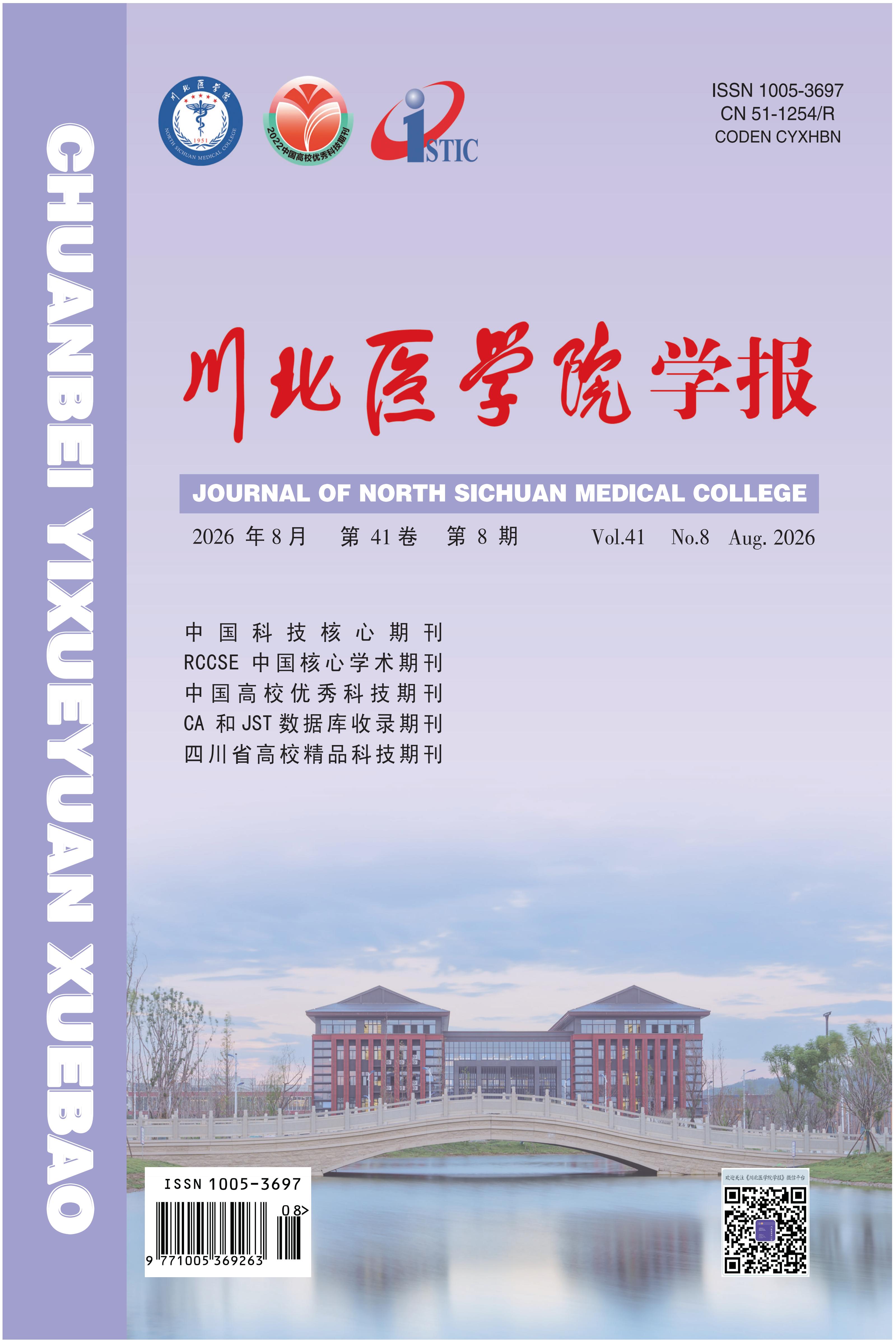
Editor in chief:Dai Rongyang
Deputy Editor-in-Chief:Li Zhi
Governed by:The Education Department of Sichuan Province
Sponsored by:North Sichuan Medical College
Phone:0817-2242637
Email:xuebaocby@126.com
ISSN1005-3697
CN51-1254/R
 NewsDownload Section
Mei Fangyu; Yang Yu-ke; Zhang Wen; Zou Ya; Yang Yang; Liu Hao
2026, 41(7):769-776+804. DOI: 10.3969/j.issn.1005-3697.2026.07.001
Abstract:Objective: To investigate the ameliorative effect of YiQi KangWei Decoction on gastric mucosal injury in rats with chronic atrophic gastritis (CAG) and to explore its underlying mechanism by which it inhibits pyroptosis of gastric epithelial cells mediated by the NLRP3/Caspase-1/GSDMD signaling pathway. Methods: 39 male SD rats were randomly divided into a control group (n=6) and a model group (n=33), the model group established a CAG model. Among the 30 rats with successful modeling, they were randomly assigned to the CAG model group, the low-dose group of YiQi KangWei decoction, the medium-dose group of YiQi KangWei Decoction, the high-dose group of YiQi KangWei Decoction, and the vitacoenzyme group. Each group consisted of 6 rats. YiQi KangWei Decoction low, medium and high dose groups were intragastric administrated with compound water decoction 5 g/kg/d, 10.15 g/kg/d and 20.3 g/kg/d, respectively, the positive drug group was administered with vitacoenzyme (200 mg/kg/d), the control group and the CAG model group were administered with the same volume of normal saline. The rats were observed for general symptoms during the intervention period, and their body weight was measured weekly. After the intervention, the gastric tissue pathological conditions were observed by HE staining. The levels of serum pepsinogen I (PGI), pepsinogen II (PGII), and the PGI/PGII ratio (PGR) were measured by ELISA, and the levels of interleukin-18 (IL-18) and interleukin-1β (IL-1β) in gastric juice were measured. The expression of nucleotide-binding oligomerization domain-like receptor protein 3 (NLRP3), GSDMD-N-terminal fragment (GSDMD-N), and high mobility group box 1 (HMGB1) in gastric tissue was detected by immunohistochemistry. The expression of Caspase-1, cleaved Caspase-1, IL-18, IL-1β, cleaved IL-1β, GSDMD, GSDMD-N, NLRP3, nuclear factor κB (p65), and phosphorylated nuclear factor κB (p-p65) proteins in gastric tissue was measured by Western Blot. Results: Compared with the CAG model group, YiQi KangWei Decoction could improve the mental state and weight gain of rats, improve the histopathological morphology and reduce the pathological scores of gastric tissue, lower the levels of PGI in serum, increase the levels of PGII and PGR, and lower the levels of IL-18 and IL-1β in gastric juice, reduce the expression of NLRP3, GSDMD-N, and HMGB1 in gastric tissue, and lower the expression of cleaved Caspase-1, IL-18, cleaved IL-1β, GSDMD-N, NLRP3, p-p65, and phosphorylated p65 protein. Conclusion: Yi Qi KangWei Decoction may inhibit the occurrence of cell pyroptosis and inflammation in CAG rats by regulating the NLRP3/Caspase-1/GSDMD signaling pathway, thereby alleviating gastric atrophy and gastric tissue damage, providing new theoretical basis and therapeutic ideas for the treatment of CAG.
Xue Junze; Wang Kun; Lin Hao; Zhang Yihao; Jiao Xuelong; Tan Xiaojie; Jiang Haitao
2026, 41(7):777. DOI: 10.3969/j.issn.1005-3697.2026.07.002
Abstract:Objective: To investigate the molecular mechanisms and pathway information of acute and chronic radiation enteritis following neoadjuvant radiotherapy for rectal cancer by proteomics-based approaches. Methods: Data-Independent Acquisition (DIA) proteomics was used to compare the non-tumor rectal tissues from patients without radiotherapy (group C) with those collected at 60~90 days (group E) and 150~160 days (group P) after radiotherapy. Differentially expressed proteins (DEPs) with |fold change (FC)| > 1.5 and P<0.05 were screened, and enrichment analyses of Gene Ontology (GO), Kyoto Encyclopedia of Genes and Genomes (KEGG), Eukaryotic Orthologous Groups (KOG) and protein domain were performed on these DEPs. Results: Compared with group C, 94 DEPs were up-regulated and 44 were down-regulated in group E, the up-regulated proteins were mainly enriched in peptide hormone processing, neuroactive ligand-receptor interaction pathway and synaptic protein domains. In the comparison of group P and group C, 46 DEPs were up-regulated and 56 were down-regulated, with the up-regulated proteins primarily enriched in negative regulation of DNA recombination, mitogen-activated protein kinase (MAPK) and Wingless-type (Wnt) signaling pathways, accompanied by changes in domains such as basic leucine zipper. Conclusion: The early phase of radiation-induced rectal injury is characterized by hyperactivity of the enteric neuro-endocrine system, whereas chronic inflammation and matrix deposition in the late phase are likely driven by the activation of MAPK/Wnt pathways. These findings may offer novel insights for the prevention and treatment of radiation enteritis.
Chen Jiali; Li Bo; Tang Xiangyu; He Yujie
2026, 41(7):784. DOI: 10.3969/j.issn.1005-3697.2026.07.003
Abstract:Objective: To investigate the expression level and clinical significance of interferon regulatory factor 6 (IRF6) in clear cell renal cell carcinoma (ccRCC), and to analyze its association with the tumor immune microenvironment. Methods: The expression of IRF6 in ccRCC tissues was analyzed using The Cancer Genome Atlas (TCGA) and Gene Expression Omnibus (GEO) databases. Clinical correlation, survival analysis, Cox regression, and nomogram modeling were performed to evaluate its prognostic value. The relationship between IRF6 expression and the tumor immune microenvironment was assessed using the ESTIMATE and CIBERSORT algorithms, followed by correlation analysis with immune checkpoint molecules and tumor mutation burden (TMB). Finally, immunohistochemistry (IHC) was conducted on 30 clinical samples to validate IRF6 protein expression. Results: IRF6 expression was downregulated in ccRCC tissues compared with normal kidney tissues (P<0.001). Low IRF6 expression was associated with higher histologic grade, advanced clinical stage, and metastatic status (P<0.05). Survival analysis demonstrated that patients with low IRF6 expression had shorter overall survival (OS), disease-specific survival (DSS), and progression-free survival (PFS) (P<0.001). Multivariate Cox regression confirmed that IRF6 was an independent protective prognostic factor (P<0.01). The nomogram incorporating IRF6 exhibited good predictive performance. Low IRF6 expression was correlated with higher ImmuneScore and ESTIMATE Score, increased infiltration of macrophages (M0/M1) and activated dendritic cells (P<0.05), and showed a negative correlation with immune checkpoints such as PD-1 and CTLA-4. IRF6 expression was inversely correlated with TMB (P<0.001). IHC results revealed that IRF6 was lowly expressed in tumor tissues (P<0.05). Conclusion: IRF6 is downregulated in ccRCC and serves as an independent protective prognostic biomarker. Its low expression is associated with an immunosuppressive tumor microenvironment and reduced immunotherapy responsiveness. IRF6 may act as a promising biomarker for prognosis evaluation and prediction of immunotherapy response in ccRCC.
2026, 41(7):792. DOI: 10.3969/j.issn.1005-3697.2026.07.004
Abstract:Objective: To design a VEGF monoclonal antibody (mAb)-modified nanoparticles co-loaded with paclitaxel (PTX) and etanidazole (ETA) for radioresistance in hypoxic tumor cells. Methods: Poly(lactic-co-glycolic acid) (PLGA) nanoparticles co-loaded PTX and ETA were prepared using a single emulsion-solvent evaporation method. VEGF monoclonal antibodies were conjugated to the nanoparticles via carbodiimide/N-hydroxysuccinimide (EDC/NHS) coupling. High-performance liquid chromatography (HPLC) was employed to analyze drug encapsulation efficiency, loading capacity, and drug release simulated in vitro. The morphology of nanoparticles was observed by scanning electron microscopy (SEM). Cellular uptake of nanoparticles by human breast cancer MCF-7 cells and cervical cancer HeLa cells was evaluated using fluorescence microscopy. The effect of drug loaded nanoparticles on the clonal formation ability of tumor cells were analysed and detected by cell survival. Results: The targeted nanoparticles exhibited a spherical morphology with an average particle size of approximately 120 nm. The drug loading capacities for PTX and ETA were 4.66% and 1.94%, respectively. In vitro release profiles demonstrated biphasic characteristics: PTX showed sustained release (30% over 5 days), while ETA exhibited rapid release (50% within 3 h and 90% within 24 h). VEGF antibody modification significantly enhanced nanoparticle uptake by both MCF-7 and HeLa cells. Combined with 10 Gy radiation, the targeted nanoparticles significantly reduced the colony formation rate of hypoxic tumor cells compared to non-targeted counterparts. Conclusion: The developed nano-system synergistically enhanced radiotherapeutic efficacy through dual mechanisms of hypoxia targeting and spatiotemporally differential drug release to provide a novel strategy to overcome tumor radioresistance.
Wu Hang; Chen Shirui; Wang Dan; Zhang Guibin; He Fang; Jiang Li
2026, 41(7):797. DOI: 10.3969/j.issn.1005-3697.2026.07.005
Abstract:Objective: To investigate the prognostic predictive value of a nomogram constructed based on albumin-related inflammatory composite indicators for patients with advanced non-small cell lung cancer (NSCLC) treated with immune checkpoint inhibitors (ICIs). Methods: The clinical data of 274 patients with advanced NSCLC were retrospectively analyzed. The overall survival (OS) was set as the primary endpoint. Independent prognostic factors were selected through the Cox proportional hazards model and a nomogram was constructed. The performance of the model was evaluated using C-index, time-dependent ROC curve, calibration curve, and DCA curve, etc. At the same time, the prognostic risk stratification ability of the model was analyzed. Results: Liver metastasis, TNM stage IV, CEA ≥ 2.54 ng/mL, and high-risk group of NPS were independent risk factors for OS. CALLY ≥ 0.6 was an independent protective factor. The AUC of the nomogram for 1-year and 3-year OS was 0.755 and 0.801, respectively, and the C-index was 0.72. The calibration curve and DCA confirmed the good fit of the model and clinical net benefit, and the patients could be stratified into low, medium, and high-risk groups. The stratification ability was significant (P<0.01). Conclusion: The nomogram constructed based on liver metastasis, TNM stage, CEA, NPS, and CALLY can effectively predict the OS of patients, and the prognostic risk stratification ability is good. The model has excellent discrimination and calibration, and has high clinical practical value, which can provide precise references for the formulation of individualized immunotherapy strategies.
2026, 41(7):805. DOI: 10.3969/j.issn.1005-3697.2026.07.006
Abstract:Objective: To compare the clinical efficacy and prognosis of intra-aqueous access reconstruction combined with phacoemulsification and glaucoma valve implantation combined with phacoemulsification in the treatment of primary open-angle glaucoma with cataract. Methods: A total of 152 patients with primary open-angle glaucoma and cataract were selected. They were divided into two groups based on the different treatment methods: group A (n=76) received glaucoma valve implantation combined with phacoemulsification, and group B (n=76) received intra-aqueous access reconstruction combined with phacoemulsification. The intraocular pressure, best corrected visual acuity, anterior chamber depth (ACD), thickness of the ganglion cell complex (GCC) in the macular area, central corneal thickness (CCT), corneal endothelial function indicators, and complications were compared between the two groups. Results: Compared with before the operation, 1 month after the operation, both groups showed a reduction in intraocular pressure. However, there was no significant difference in intraocular pressure between the two groups (P>0.05). The best corrected visual acuity of the operated eyes in group B was lower than that in group A (P<0.05), and the ACD was higher in group B (P<0.05). The GCC in group B was higher than that in group A, while the CCT was lower than that in group A (P<0.05). 1 month after the surgery, the density of corneal endothelial cells and the proportion of hexagonal cells in group B were both higher than those in group A (P<0.05). Compared with group A, the coefficient of variation of corneal endothelial cells in group B was smaller (P <0.05). There was no statistically significant difference in the overall incidence of complications between the two groups (P >0.05). Conclusion: Reconstruction of intra-aqueous access reconstruction combined with phacoemulsification for patients with primary open-angle glaucoma and coexisting cataract effectively lowers intraocular pressure, restores visual function, mitigates corneal endothelial cell damage, and does not increase the incidence of postoperative complications.
Zhang Yu; Department of Real Estate
2026, 41(7):810. DOI: 10.3969/j.issn.1005-3697.2026.07.007
Abstract:Objective: To compare the efficacy and safety of low-molecular-weight heparin and rivaroxaban in the prevention of thrombosis after total joint arthroplasty (TJA) based on a prospective cohort. Methods: A total of 280 adult patients scheduled for elective total hip arthroplasty or total knee arthroplasty were prospectively recruited and divided into two groups based on different intervention methods. The heparin group included 140 patients who were given subcutaneous injections of low-molecular-weight heparin after surgery. The rivaroxaban group included 140 patients who were given oral rivaroxaban after surgery. Both groups were treated for 21 days, and the efficacy and safety of thrombosis prevention were compared between the two groups. Results: The incidence rates of deep vein thrombosis (DVT) in the rivaroxaban group at 7, 14, and 21 days after surgery were lower than those in the heparin group (P<0.05). After treatment, the plasma fibrinogen (Fib) levels, the prothrombin time (PT), activated partial thromboplastin time (APTT), and thrombin time (TT) were longer than those before treatment (P<0.05), and the rivaroxaban group was longer than the heparin group (P<0.05). The whole blood low shear viscosity, whole blood medium shear viscosity, whole blood high shear viscosity, and endothelin-1 (ET-1) levels were all lower than those before treatment (P<0.05), and those in the rivaroxaban group were lower than those in the heparin group (P<0.05). The nitric oxide (NO) levels were higher than those before treatment, and the rivaroxaban group were higher than the heparin group (P<0.05). The incidence rates of bleeding and subcutaneous ecchymosis in the rivaroxaban group were lower than those in the heparin group (P<0.05), the proportion of the maximum subcutaneous ecchymosis area in the rivaroxaban group was lower than that in the heparin group (P <0.05). Conclusion: Rivaroxaban can better control the hemorheology of patients after TJA, improve vascular endothelial function, and regulate coagulation function indicators, thereby more effectively preventing postoperative thrombosis and is safer than low-molecular-weight heparin.
Liu Xinyu; Qiu Yafen; Yao Guang
2026, 41(7):815. DOI: 10.3969/j.issn.1005-3697.2026.07.008
Abstract:Objective: To observe clinical efficacy of different concentrations 5-aminolevulinic acid photodynamic therapy (5-ALA-PDT) in grade I-II cervical intraepithelial neoplasia (CIN) combined with human papillomavirus (HPV) infection. Methods: A total of 104 patients with grade I-II CIN and HPV infection were enrolled as the research objects. According to different interventions, they were divided into high-concentration group (20% 5-ALA-PDT) and low-concentration group (10% 5-ALA-PDT), 52 cases in each group. Both groups were treated for 6 months. The efficacy, negative conversion rate of HPV, cervical function (cervical canal stenosis, abnormality of cervical mucus secretion, cervical adhesion) and adverse reactions (scar formation, infection, pain, increased vaginal discharge, lower abdominal distension) were compared between the two groups. Results: After 6 months of treatment, there was no significant difference in total response rate between patients with grade I CIN and those with grade II CIN in high-concentration group and low-concentration group (P>0.05), but there were significant differences in total response rate between high-concentration treatment and low-concentration treatment for patients with grade II CIN (P<0.05). In high-concentration group, there was no significant difference in 6-month negative conversion rate of HPV between grade I CIN and grade II CIN (P>0.05). In low-concentration group, 6-month negative conversion rate of HPV in grade I CIN was higher than that in grade II CIN (P<0.05). For patients with grade I CIN, there was no significant difference in negative conversion rate of HPV between high-concentration treatment and low-concentration treatment (P >0.05). For patients with grade II CIN, negative conversion rate of HPV after high-concentration treatment for 6 months was higher than that after low-concentration treatment (P <0.05). After 6 months of treatment, there was no significant difference in the incidence of cervical canal stenosis, abnormal cervical mucus secretion and cervical adhesion between high-concentration group and low-concentration group (P>0.05). The incidence of adverse reactions in high-concentration group was higher than that in low-concentration group (P<0.05). Conclusion: The efficacy of high-concentration 5-ALA-PDT is significant in grade II CIN combined with HPV infection, and negative conversion rate of HPV is considerable. However, the effect of high-concentration 5-ALA-PDT is few in improving efficacy and negative conversion rate of HPV in patients with grade I CIN and HPV infection, and it will instead increase the incidence of adverse reactions.
Wang Yulu; Yang Zheng; Han Fang; Chang Chunyang
2026, 41(7):819. DOI: 10.3969/j.issn.1005-3697.2026.07.009
Abstract:Objective: To observe the curative effect of enoxaparin sodium combined with modified Xuefu Zhuyu Decoction and acupuncture in deep vein thrombosis (DVT) and explore its action mechanism. Methods: The patients with DVT treated in the hospital were retrospectively enrolled, including 53 cases in control group (anticoagulation therapy with enoxaparin sodium) and 53 cases in observation group (enoxaparin sodium combined with modified Xuefu Zhuyu Decoction + acupuncture). The clinical effect, circumference difference of affected limbs before and after treatment, and level of serum D-dimer (D-D) were compared between the two groups. The changes in hemorheology (hematocrit, red blood cell distribution width, fibrinogen) and serum inflammatory factor [interleukin (IL)-6] before and after treatment were observed. The correlation between hemorheology indexes, serum inflammatory factor and circumference difference of affected limbs was analyzed. Results: Compared with control group after treatment, total response rate was higher in observation group (P<0.05), circumference difference of thigh/shank, levels of serum D-D, hemorheology indexes and IL-6 were lower (P <0.05). The hemorheology indexes and serum IL-6 were positively correlated with circumference difference of thigh/shank (P<0.001). Conclusion: The clinical curative effect of modified Xuefu Zhuyu Decoction combined with acupuncture is more significant in DVT, and the mechanism of action may be related to improving hemorheology state and inhibiting excessive inflammatory response.
Wang Fangfang; Liu Depei; Liao Yunxia
2026, 41(7):823. DOI: 10.3969/j.issn.1005-3697.2026.07.010
Abstract:Objective: To investigate the efficacy of Fuyang cupping therapy combined with western medicine in the treatment of chronic pelvic pain secondary to sequelae of pelvic inflammatory disease (SPID-CPP). Methods: A total of 100 SPID-CPP patients were selected and divided into two groups according to different treatment options, 50 cases in each group. The control group was managed with oral ibuprofen. On this basis, the observation group received supplementary Fuyang cupping sessions. Both groups received treatment for 3 menstrual cycles. The scores of pain score (lower abdominal pain, lumbosacral pain), local sign score, the TCM syndrome scores and quality of life scores were compared between the two groups. Serum inflammatory factors [hypersensitive C-reactive protein (hs-CRP), interleukin-6 (IL-6)] and hemorheology indexes [erythrocyte sedimentation rate (ESR), fibrinogen (Fib), plasma viscosity] were detected in both groups, and the efficacy and incidence of adverse reactions were assessed in each of the two groups. Results: The total effective rate was higher in the observation group than that in the control group (P<0.05). Post-treatment assessments revealed that the observation group had reduced lower abdominal pain, lumbosacral pain, local sign, and TCM syndrome scores relative to the control group (P<0.05), while their quality of life score was elevated (P<0.05). After treatment, the levels of serum hs-CRP, IL-6, ESR, Fib and plasma viscosity in the observation group were lower than those in the control group (P<0.05). There was no statistically significant difference in the total incidence of adverse reactions between the two groups (P>0.05). Conclusion: Fuyang cupping therapy assisted with western medicine exerts a significant efficacy in the treatment of SPID-CPP. It can more effectively alleviate pain, improve local symptoms, and its underlying mechanism may be related to reducing inflammation and improving hemorheology.
Sun Xuejing; Yan Xiaoyan; Liu Congyan; Sun Wanling; Hui Wuhuan
2026, 41(7):827. DOI: 10.3969/j.issn.1005-3697.2026.07.011
Abstract:Objective: To investigate the intrinsic associations between the immunophenotype of bone marrow plasma cells, the status of circulating plasma cells (CPCs), and bone marrow infiltration patterns in patients with multiple myeloma (MM), thereby elucidating the molecular mechanisms underlying CPCs formation. Methods: A total of 83 patients with newly diagnosed MM were enrolled and divided into a CPCs-positive group (n=34) and a CPCs-negative group (n=49) based on peripheral blood flow cytometry results. Flow cytometry was employed to detect the expression of CD56, CD27, CD81, CD45, and CD19 in bone marrow and peripheral blood plasma cells, as well as to assess cytoplasmic light chain restriction. Bone marrow biopsy pathology was performed to determine the bone marrow infiltration patterns (interstitial, nodular, or diffuse). Differences in immunophenotype and infiltration patterns between the two groups were compared. The correlation of CD56, CD27, and CD81 expression in the CPC-positive group was analyzed, and multivariate Logistic regression was used to identify independent influencing factors for CPCs positivity. Results: In the CPCs-positive group, the proportion of Lambda light chain restriction was higher than that in the negative group, while the proportion of Kappa light chain restriction was lower than that in the negative group (P<0.05), and the proportion of diffuse infiltration was also higher than that in the negative group (P<0.05). The positivity rates of CD56 and CD27 in bone marrow plasma cells in the CPCs-positive group were lower than those in the negative group (P<0.05), whereas the positivity rate of CD81 was higher than that in the negative group (P<0.05). CD56 expression was positively correlated with CD27 (P <0.05) and negatively correlated with CD81 (P <0.05). Gradient differences in immunophenotypes were observed among different bone marrow infiltration patterns: within the CPCs-positive group, patients with diffuse infiltration exhibited lower positivity rates of CD56 and CD27 compared to those with nodular and interstitial infiltration (P<0.05), conversely, the positivity rate of CD81 in patients with diffuse infiltration was higher than that in patients with nodular and interstitial infiltration (P <0.05). Multivariate Logistic regression analysis indicated that only the reduced positivity rate of CD56 in bone marrow plasma cells was an independent influencing factor for CPC positivity (P<0.05). Conclusion: The loss of CD56 expression in bone marrow plasma cells is a key driving factor for the emergence of CPCs in MM patients, and this aberrant molecular expression is closely associated with the diffuse bone marrow infiltration pattern. CD56 can serve as a molecular marker to identify high-risk MM patients with “migration-prone” characteristics, providing a novel basis for risk stratification and targeted therapy in multiple myeloma.
Liang Jiahao; Qian Chuanmu; Liang Fei
2026, 41(7):832. DOI: 10.3969/j.issn.1005-3697.2026.07.012
Abstract:Objective: To investigate the effect of tegileridine fumarate on postoperative analgesia and early recovery quality, as well as its safety, in patients undergoing laparoscopic gastrointestinal tumour surgery. Methods: A retrospective analysis was conducted on 120 patients who underwent laparoscopic gastrointestinal tumour surgery. All patients received postoperative analgesia via patient-controlled intravenous analgesia (PCIA). Based on the different analgesic drugs used, they were divided into an observation group (tegileridine fumarate, n =53) and a control group (sufentanil combined with nalbuphine, n=67). Postoperative pain intensity, serum pain mediator levels, and sleep quality were assessed. Hospital stay duration, hospitalisation costs, and related adverse reactions were also recorded. Results: The VAS scores at 24, 48, and 72 h postoperatively were lower in the observation group than in the control group(P<0.05). At 72 h postoperatively, serum levels of substance P(SP), prostaglandin E2(PGE2), and calcitonin gene-related peptide(CGRP) were lower in the observation group than in the control group(P<0.05). On the day after surgery, the observation group showed better scores than the control group in sleep quality, sleep latency, sleep duration, sleep efficiency, sleep disturbance, and total Pittsburgh Sleep Quality Index (PSQI) score(P<0.05). The hospital stay was shorter(P<0.05) and hospitalisation costs were lower(P<0.05) in the observation group compared to the control group. The incidence of postoperative nausea/vomiting and respiratory depression in the observation group was lower than that in the control group (P<0.05). Conclusion: Tegileridine fumarate helps optimise postoperative analgesic effects and early sleep quality in patients undergoing laparoscopic gastrointestinal tumour surgery, shortens hospital stay, reduces hospitalisation costs, and demonstrates a favourable safety profile
Zhang Jie; Zhang Haiyan; Cao Wei; Cao Lin; Meng Yan; Wang Yu
2026, 41(7):837. DOI: 10.3969/j.issn.1005-3697.2026.07.013
Abstract:Objective: To explore the effects of ezetimibe combined with rosuvastatin on efficacy, blood lipids, limb motor function in elderly patients with intracranial atherosclerosis (ICA) caused ischemic stroke. Methods: A total of 190 elderly patients with ICA caused ischemic stroke were selected as the research subjects. According to treatment methods, the patients were divided into control group and observation group, with 95 cases in each group. The patients of control group were treated with rosuvastatin, and observation group was treated with ezetimibe on the basis of the control group. The patients of two groups received continuous treatment for 6 months. The efficacy \[modified rankin scale (mRS), national institutes of health stroke scale(NIHSS)\], blood lipids\[total cholesterol(TC), triglycerides(TG), high-density lipoprotein cholesterol(HDL-C), low-density lipoprotein cholesterol (LDL-C), lipoprotein-associated phospholipase A2 (Lp-PLA2)\], limb motor function \[Fugl-Meyer motor assessment(FMA) score, activities of daily living(ADL) score\], and adverse reactions of two groups were compared. Results: After treatment, the mRS and NIHSS scores of observation group were both lower than those of the control group(P<0.05). After treatment, the TG, TC, LDL-C, and Lp-PLA2 of the observation group were decreased compared with control group(P<0.05). After treatment, the FMA upper and lower limb motor scores and ADL scores in the observation group were increased compared with control group (P <0.05). There was no statistically significant difference in the occurrence of adverse reactions between the two groups(P>0.05). Conclusion: The combination of ezetimibe and rosuvastatin improved neurological function and reduced blood lipid levels in elderly patients with ICA caused ischemic stroke. The combination therapy improved the patients’ limb motor function and daily living ability.
2026, 41(7):841. DOI: 10.3969/j.issn.1005-3697.2026.07.014
Abstract:Objective: To explore the association between endometriosis and cancer risk, and to evaluate the potential causal relationship through Mendelian Randomization (MR) analysis. Methods: Female participants were divided into two groups according to the presence or absence of endometriosis. Multivariate Logistic regression model was used to analyze the relationship between endometriosis and the risk of cancer. The possible confounding factors such as age, body mass index (BMI), race, education level, smoking status, marital status, menarche age, parity, family poverty to income ratio (PIR), diabetes and hypertension were gradually controlled. Subgroup analysis and interaction testing were performed. To test potential causal relationships, single nucleotide polymorphisms (SNPs) associated with endometriosis were selected as instrumental variables on the basis of genome-wide association studies (GWAS), and the causal effects were mainly estimated by inverse variance weighting(IVW). Sensitivity analysis was performed using MR-Egger and Cochrane’s Q test. Results: A total of 3,987 participants were included in NHANES data. Multivariate Logistic regression showed that endometriosis was associated with an increased incidence of malignant tumors \[odds ratio (OR):2.160,95% confidence interval(95%CI):1.429~3.264,P < 0.001\]. The results of subgroup analysis were consistent(all P for interaction>0.05). Two-sample Mendelian randomization analysis showed that endometriosis was associated with an increased risk of ovarian cancer(OR=1.493,95%CI:1.220~1.827,P< 0.001), endometrial cancer(OR=1.125,95%CI:1.037~1.219,P=0.004). There was a causal relationship between the increased risk of cervical cancer(OR=1.186,95%CI:1.063~1.323,P=0.002), and endometriosis was the most closely related to ovarian cancer. Further MR Analysis of the association between endometriosis and different histological subtypes of ovarian cancer revealed that: There was a significant association between endometriosis and high-grade serous ovarian cancer(OR= 1.122,95%CI:1.054~1.195,P<0.001), low-grade serous ovarian cancer(OR= 1.269,95%CI:1.085~1.485,P=0.002), ovarian clear cell carcinoma(OR=1.491,95%CI:1.277~1.741,P<0.001), and endometrioid carcinoma(OR= 1.392,95%CI:1.266~1.530,P<0.001). Although there was an association between endometriosis and low-grade mucinous ovarian cancer (OR = 1.148,95%CI:1.027~1.283,P =0.015), this association was no longer statistically significant after FDR correction. There was no significant association between endometriosis and invasive mucinous ovarian cancer(OR=1.123,95%CI:0.987~1.279,P=0.079). Conclusion: The combined evidence from the NHANES-NDI cohort and MR Analysis suggests an increased risk of ovarian cancer in women with endometriosis, as seen with other gynecologic malignancies, and provides a new epidemiological basis for exploring the potential causal relationship between endometriosis and gynecologic cancers.
Luo Dandan; Lan Liubing; Wu Heming; Zhang Hua
2026, 41(7):847. DOI: 10.3969/j.issn.1005-3697.2026.07.015
Abstract:Objective: To investigate the effects of labetalol combined with low-dose aspirin and vitamin D on miR-210, SIRT3 and placental blood perfusion in patients with gestational hypertension. Methods: 90 pregnant women with gestational hypertension were selected as the research subjects. Based on therapeutic regimens, they were allocated to either a control group (n=42) receiving labetalol plus low-dose aspirin, or a combination group (n =48) receiving additional vitamin D supplementation. miR-210, silencing information regulatory factor 3 (SIRT3), placental perfusion parameters \[pulsatility index(PI), resistance index (RI), and peak systolic/end diastolic flow velocity (S/D)\], as well as adverse pregnancy outcomes and adverse reactions were compared between the two groups. Results: The combination group exhibited lower miR-210 expression(P<0.05) and higher SIRT3 mRNA levels(P<0.05) in placental tissues relative to controls. Compared with the control group, the PI, RI, and S/D of placental blood perfusion parameters in combination group were lower(P<0.05). There was no statistically significant difference in the incidence of adverse pregnancy outcomes and adverse reactions between the two groups(P>0.05). Conclusion: Labetalol combined with low-dose aspirin and vitamin D can more effectively regulate the expression imbalance of miR-210 and SIRT3 in placental tissue of patients with hypertensive disorder complicating pregnancy, improve placental blood perfusion, and has good safety.
Xie Peiling; Li Xiaochun; He Na; Bao Jing
2026, 41(7):851. DOI: 10.3969/j.issn.1005-3697.2026.07.016
Abstract:Objective: To analyze the risk factors for progression of visual field defects after micropulse laser trabeculoplasty (MLT) in patients with open-angle glaucoma. Methods: 90 patients (180 eyes) with primary open-angle glaucoma (POAG) who underwent MLT were selected. Based on progression of visual field defects at one year post-surgery, they were assigned to the progression group and the non-progression group. Clinical data of the two groups were collected and compared. Logistic regression was used to analyze the risk factors for progression of visual field defects after MLT. Results: The differences in gender, age, place of residence, body mass index (BMI), education level, drinking history, hypertension, smoking history, family history of glaucoma, history of glaucoma surgery, preoperative highest intraocular pressure, types of preoperative medications, status of cataract surgery, LogMAR visual acuity, central corneal thickness (CCT), and axial length between the two groups were not statistically significant(P>0.05). The proportions of patients with diabetes, preoperative visual field stage 0~3, and severe damage in both superior and inferior retinal nerve fiber layers (RNFL) were higher in the progression group than in the non-progression group(P<0.05). Diabetes, preoperative visual field stage 0~3, and severe damage in both superior and inferior RNFL were risk factors for progression of visual field defects after MLT in patients with POAG (P<0.05). Conclusion: Diabetes, preoperative visual field stage 0~3, and severe damage in both superior and inferior RNFL are main risk factors for progression of visual field defects after MLT in patients with POAG, which deserves close attention in clinical practice
Guo Jing; Song Dongyun; Cui Can; Ma Rui; Liu Rui; Han Chunchun
2026, 41(7):855. DOI: 10.3969/j.issn.1005-3697.2026.07.017
Abstract:Objective: To compare the curative effect of tumor necrosis factor (TNF) antagonist and interleukin 17 (IL-17) in ankylosing spondylitis (AS) and their effects on patients’ immune function. Methods: A retrospective analysis was performed on the data of 244 patients with AS. According to different medication methods, patients were divided into TNF antagonist group (n=196, adalimumab) and IL-17 antagonist group (n=45, secukinumab). The disease activity and function \[AS Disease Activity Score (ASDAS), Bath AS Functional Index (BASFI) and Bath AS Disease Activity Index (BASDAI)\], clinical symptoms \[Visual Analog Scale (VAS) scores for lower back and nighttime pain and duration of morning stiffness\], serological indicators \[C-reactive protein (CRP), erythrocyte sedimentation rate (ESR), white blood cell count (WBC)\], immune function \[immunoglobulin G (IgG), IgA and IgM\], and incidence of adverse reactions before treatment, after 4 and 24 weeks of treatment were compared between the two groups. Results: After treatment, ASDAS was lower, and BASFI was higher in TNF antagonist group(P<0.05). The changes in pain degree at low back and night, and the duration of morning stiffness were more significant in TNF antagonist group after 4 weeks of treatment, while the above changes were more significant in IL-17 antagonist group after 24 weeks of treatment(P<0.05). After 4 and 24 weeks of treatment, the levels of CRP, ESR, and WBC in both groups decreased(P<0.05), and the levels of CRP and ESR in the TNF antagonist group were lower than those in the IL-17 antagonist group(P<0.05). The IgG level in the TNF antagonist group decreased (P<0.05) and was lower than that in the IL-17 antagonist group(P<0.05). There was no statistically significant difference in the occurrence of adverse reactions between the two groups(P>0.05). Conclusion: Adalimumab has short onset time and better improvement effect on immune function and biochemical indexes, while secukinumab is more beneficial to improve clinical symptoms in patients.
Li Qiong; Chen Xiaoying; Qu Taoran; Yang Ping; Zhou Hanpei; Niu Kaiyu
2026, 41(7):860. DOI: 10.3969/j.issn.1005-3697.2026.07.018
Abstract:Objective: To explore the application effect of different materials in the restoration of inlay crown for patients with large-area dental defects after root canal therapy. Methods: A total of 107 patients with large-area dental defects after root canal therapy were enrolled. According to different restoration materials, they were divided into zirconia group (36 cases, 41 teeth), cast porcelain group (35 cases, 40 teeth) and resin group (36 cases, 43 teeth). All were followed up for 24 months to evaluate the restoration effect, functional recovery, exhibition of aesthetics, periodontal health and complications. Results: At 18 and 24 months after restoration, success rate of restoration, bite force, masticatory efficiency and periodontal health indexes in zirconia group were better than those in cast porcelain group and resin group (P<0.05). The comprehensive scores of color matching and aesthetics in cast porcelain group were higher than those in zirconia group and resin group(P<0.05). There was no significant difference in morphological coordination or surface smoothness between zirconia group and cast porcelain group (P>0.05), but which in the two groups were better than those in resin group(P<0.05). There were statistically significant differences in the incidence of complications among the three groups of patients(P<0.05), the incidence of complications was the lowest in zirconia group, while which was the highest in resin group(P<0.05). Conclusion: Zirconia has the best long-term restoration effect, functional recovery and safety, cast porcelain has significant aesthetic advantages, and resin is suitable for short-term transitional restoration. In clinical practice, selection should be made according to one’s needs.
Zhang Ju; Luo Fuxiu; Tang Wenwu; Li Rong
2026, 41(7):865. DOI: 10.3969/j.issn.1005-3697.2026.07.019
Abstract:Objective: To explore the risk factors associated with osteoporosis (OP) and hip fractures in patients undergoing maintenance hemodialysis (MHD). Methods: 179 patients with MHD were selected as the research subjects, and were divided into medium and low-risk groups(n=105) and high-risk groups(n=74) based on the risk assessment results of OP or hip fracture using the FRAX system. The factors influencing the risk of OP or hip fracture in MHD patients was analyzed by univariate and multivariate Logistic regression analysis, the relationship between high risk of OP or hip fracture and indicators related to MHD patients were analyzed by Pearson correlation analysis, the predictive value of related indicators for the high risk of OP or hip fracture in MHD patients was analyzed by ROC curve analysis. Results: Univariate analysis showed that there were statistically significant differences in age, BMI, C-reactive protein(CRP), prealbumin(PAB), serum creatinine(Scr), serum uric acid(UA), and serum sodium between the two groups(P<0.05). Multivariate Logistic regression analysis demonstrated that low levels of PAB, Scr, and UA (OR=0.901,95%CI:0.836~0.965,OR=0.996,95%CI:0.994~0.998, OR=0.994,95% CI:0.989~0.999,respectively), as well as comorbid hypertension(OR=4.507,95% CI:1.478~14.559), were independently associated with a high risk of osteoporotic or hip fractures(P<0.05). The Pearson correlation analysis results showed that the high risk of OP or hip fracture was negatively correlated with serum iron, albumin PAB, Urea nitrogen Scr, UA, Blood phosphorus(P<0.05). ROC curve analysis revealed that a combined model of PAB, Scr, UA, and hypertension yielded an AUC of 0.840 (95% CI:0.783~0.897,P <0.001), with a sensitivity of 67.6% and a specificity of 82.9%. Conclusion: This study indicates that decreased levels of PAB, Scr, and UA, along with hypertension, are significant risk factors for fractures in MHD patients. Close monitoring of these indicators and strict blood pressure management are recommended to reduce fracture risk. These findings provide a valuable reference for individualized risk assessment in clinical practice.
2026, 41(7):870. DOI: 10.3969/j.issn.1005-3697.2026.07.020
Abstract:Objective: To investigate the clinical efficacy of low-dose morphine combined with isosorbide dinitrate (Isoket) in the treatment of acute left heart failure (ALHF) on the basis of conventional therapy. Methods: A total of 89 patients with ALHF were selected and divided into treatment group (n=45) and control group (n=44) according to different treatment methods. Both groups received conventional treatments such as cardiotonic, diuretic, antispasmodic and antiasthmatic therapy, and oxygen inhalation. On this basis, the treatment group was treated with low-dose morphine combined with Isoket, while the control group was treated with Isoket alone. Both groups were treated for 24 hours. The clinical efficacy at 30 min, 1 and 24 h after treatment, hemodynamic indexes, blood gas analysis indexes, cardiac function indexes and adverse reactions before and after treatment were compared between the two groups. Results: The total effective rates of the treatment group at 30 min, 1 and 24 h were higher than those of the control group(P<0.05). After 1 and 24 h of treatment, the heart rate(HR), systolic blood pressure(SBP), diastolic blood pressure(DBP) and pulmonary artery wedge pressure(PAWP) of both groups decreased compared with before treatment(P<0.05), and those of the treatment group were lower than those of the control group(P<0.05). The PaO2 and SpO2 increased compared with before treatment, and the PaCO2 decreased, with a better improvement range than the control group (P<0.05). After 24 hours of treatment, left ventricular ejection fraction (LVEF) increased in both groups(P<0.05), and the treatment group was higher than the control group(P<0.05), left ventricular end-diastolic diameter(LVEDD) decreased in all groups (P<0.05), and the treatment group was smaller than the control group (P<0.05). There was no significant difference in the incidence of adverse reactions between the two groups(P>0.05). Conclusion: Low-dose morphine combined with Isoket in treatment of acute left heart failure can quickly improve clinical symptoms, hemodynamics and cardiac function of patients with good safety, which has high clinical promotion value.
Li Yi; Yang Xueli; Lu Chengkang; Xu Yi; Duan Fengmei
2026, 41(7):874. DOI: 10.3969/j.issn.1005-3697.2026.07.021
Abstract:Objective: To explore the effect of combining norepinephrine bitartrate with ulinastatin on patients with septic shock and the improvement role on hemodynamics and cardiac function. Methods: According to different treatment methods, 91 patients with septic shock were divided into observation group (ulinastatin combined with norepinephrine bitartrate, n=47) and control group (norepinephrine bitartrate, n=44). Both groups were treated continuously for 7 days and followed up for 28 days. Prognosis indexes, disease severity, coagulation-inflammation indexes, cardiac function parameters, hemodynamic parameters and adverse reactions were compared between the two groups. Results: No obvious differences in 28-day mortality rate and antibiotic use time were found between groups(P>0.05), and the durations of key measures (vasoactive drug and mechanical ventilation) and ICU stay were shorter in observation group compared to control group(P<0.05), and the disease severity scores, coagulation-inflammation indexes, cardiac function and hemodynamic parameters were better(P<0.05). There was no statistically significant difference in adverse reactions between the two groups (P >0.05). Conclusion: Ulinastatin combined with norepinephrine bitartrate for patients with septic shock can help to enhance blood flow status and cardiac function, regulate inflammation and coagulation status, and shorten the treatment time, with good safety
Zheng Hui; Qi Xiaorong; Li Junnan
2026, 41(7):879. DOI: 10.3969/j.issn.1005-3697.2026.07.022
Abstract:This case report details a case of stage IV Twin-to-twin transfusion syndrome (TTTS) complicated by cervical insufficiency, in which fetoscopic laser coagulation (FLC) following emergency cervical cerclage yielded favorable maternal and neonatal outcomes, thereby providing a practical reference for the management of such rare, acute, and severe conditions
2026, 41(7):884. DOI: 10.3969/j.issn.1005-3697.2026.07.023
Abstract:Objective: To explore the clinical expanded application value and compatibility rationale of the modified Chaihu Guizhi Decoction (Bupleurum and Cinnamon Twig Decoction) in the treatment of coronary heart disease, chronic urinary tract infection, and posterior circulation ischemia. Methods: 3 patients diagnosed respectively with coronary heart disease, chronic urinary tract infection, and posterior circulation ischemia were selected. Based on the core effects of Chaihu Guizhi Decoction—harmonizing Shaoyang, regulating the triple energizers, relieving muscle surfaces, harmonizing nutrient qi and defensive qi, supporting yang to transform qi, and coordinating yin and yang—modifications were made according to the pathophysiological characteristics of each patient. Clinical efficacy was observed, and the compatibility logic between the pathogenesis and formula was analyzed using traditional Chinese medicine theory. Results: After treatment with the modified Chaihu Guizhi Decoction, clinical symptoms significantly improved in all three patients, relevant auxiliary examination indicators recovered or improved, and no significant recurrence was observed during follow-up. Conclusion: Chaihu Guizhi Decoction is not only suitable for treating the combined pattern of Taiyang and Shaoyang disorders but also effective for cardiovascular, urinary, and neurological diseases characterized by liver qi stagnation and qi stagnation, disharmony between nutrient and defensive qi, complicated by phlegm-stasis obstruction and deficiency of healthy qi. Modified application based on pattern differentiation yields good results, reflecting the essence of TCM treatment based on pattern differentiation known as treating different diseases with the same method.
Wang Juan; Jiang Yan; Yin Xiaobing; Chen Ran; Han Lijuan; Liang Xiyun; Zhou Yan
2026, 41(7):887. DOI: 10.3969/j.issn.1005-3697.2026.07.024
Abstract:Objective: To explore the clinical effectiveness of exercise interventions for cancer-related fatigue in colorectal cancer (CRC) patients undergoing chemotherapy based on evidence-based evidence. Methods: A total of 76 patients with CRC were prospectively selected, and they were divided into two groups according to different intervention methods. 38 patients in the control group received routine intervention, and the remaining 38 patients in the treatment group were given exercise intervention under evidence-based concept. The cancer-related fatigue (CRF) grading, physical activity status, exercise compliance, quality of life \[Quality of Life Questionnaire Core-30 (QLQ-C30)\] scores and occurrence of exercise-related adverse events were compared between the two groups. Results: After intervention, compared with the control group, the CRF grading in the treatment group was lower(P<0.05). The physical activity compliance rate in the treatment group was higher compared with that in the control group(P<0.05). The treatment group had higher exercise compliance degree(P<0.05). Compared with the control group, the QLQ-C30 symptom field score in the treatment group was lower while the scores of overall health field and functional field were higher(P<0.05). There was no statistical difference in the incidence of exercise-related adverse events between both groups(P>0.05). Conclusion: Exercise intervention under evidence-based concept can significantly reduce the CRF grading in patients with CRC chemotherapy, further improve the physical activity and exercise compliance, and enhance the quality of life.
2026, 41(7):892. DOI: 10.3969/j.issn.1005-3697.2026.07.025
Abstract:Objective: To explore the preoperative psychological characteristics of women undergoing painless artificial abortion with superconducting visualization and to evaluate the clinical efficacy of targeted psychological nursing interventions. Methods: A total of 200 women who underwent superconducting visual painless artificial abortion were selected and divided into a control group (n=100, receiving routine nursing care) and a study group (n=100, implementing psychological characteristic analysis and targeted nursing interventions) according to different intervention methods. The Self-Rating Anxiety Scale (SAS) and Self-Rating Depression Scale (SDS) scores before and after nursing care were compared between the two groups. The Numerical Rating Scale (NRS) was used to assess postoperative pain levels. Systolic blood pressure, diastolic blood pressure, and heart rate fluctuations were monitored and recorded. Compliance and nursing satisfaction were also investigated. Results: There was no significant difference in SAS and SDS scores between the two groups before nursing care (P >0.05), after nursing care, the study group was significantly lower than the control group (P < 0.05). The NRS scores and fluctuations in various physiological indicators at anesthesia awakening, 30 minutes, and 60 minutes post-operation in the study group were lower than those in the control group(P<0.05). The compliance and overall satisfaction of the study group were better than those of the control group (P <0.05). Conclusion: By analyzing the preoperative psychological characteristics of women undergoing superconductive visual painless induced abortion and developing targeted psychological nursing interventions, women’s psychological status can be improved, their depression and anxiety levels can be effectively reduced, and the patient’s pain level can be effectively relieved, leading to a significant increase in compliance and satisfaction.
Editor in chief:Dai Rongyang
Deputy Editor-in-Chief:Li Zhi
Governed by:The Education Department of Sichuan Province
Sponsored by:North Sichuan Medical College
Phone:0817-2242637
Email:xuebaocby@126.com
ISSN1005-3697
CN51-1254/R
NewsDownload Section External Links