Editor in chief:Dai Rongyang
Deputy Editor-in-Chief:Li Zhi
Governed by:The Education Department of Sichuan Province
Sponsored by:North Sichuan Medical College
Phone:0817-2242637
Email:xuebaocby@126.com
ISSN1005-3697
CN51-1254/R
 NewsDownload Section


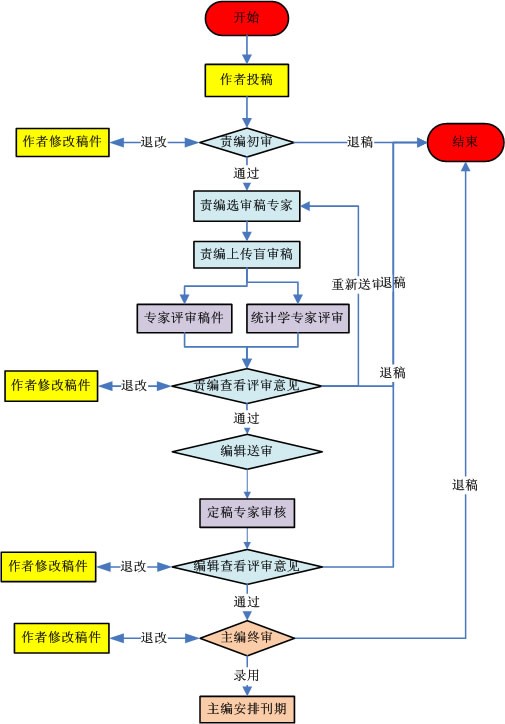
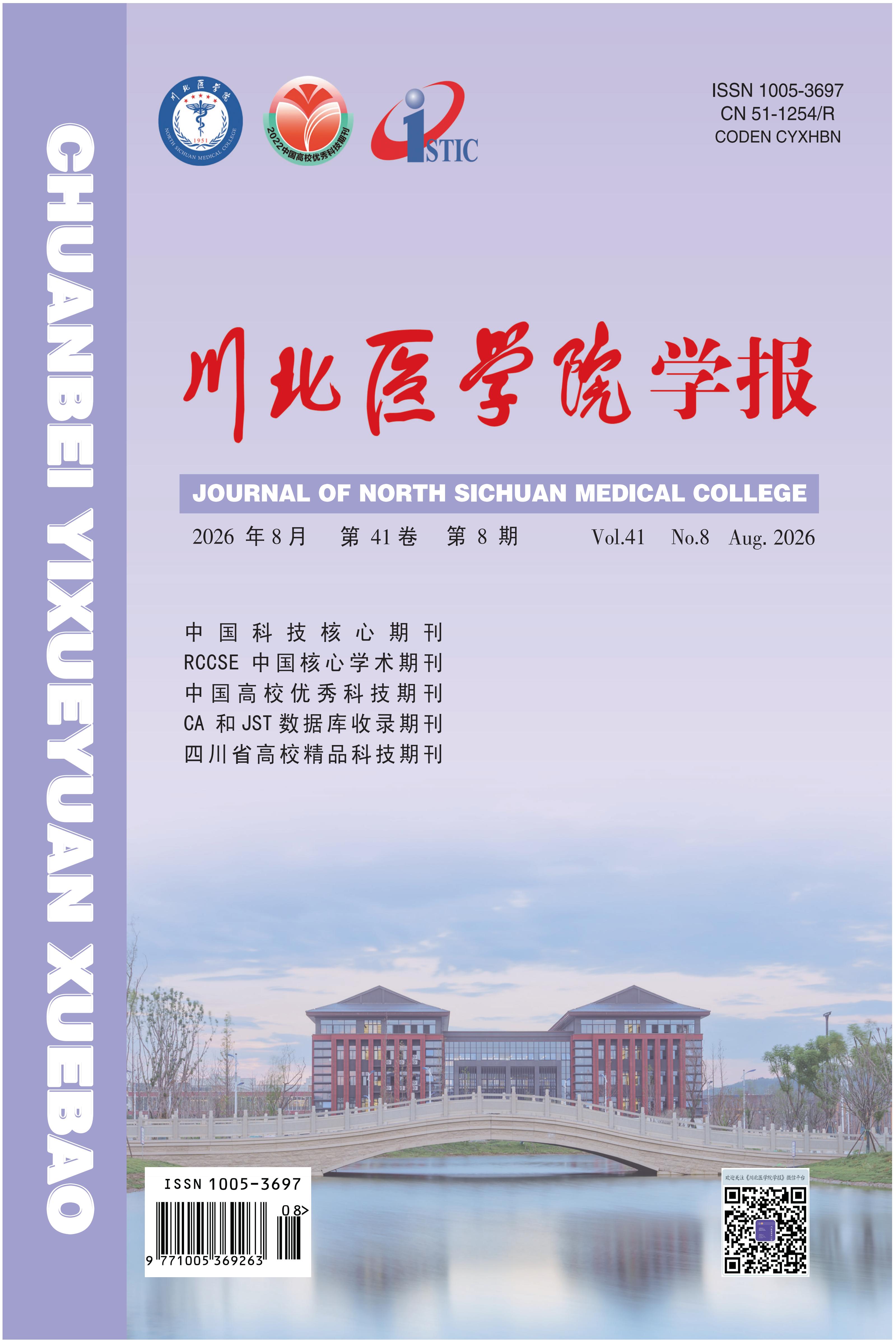
Journal of North Sichuan Medical College (ISSN 1005-3697, CN 51-1254/R) is a comprehensive academic journal in medicine and health, approved by the National Press and Publication Administration. Published monthly (on the 28th of each month) and sponsored by North Sichuan Medical College and governed by the Education Department of Sichuan Province, it is publicly distributed both domestically and internationally. The journal is indexed as a China Science and Technology Core Journal, an RCCSE China Core Academic Journal (Grade A), an Excellent Science and Technology Journal of Chinese Universities, and an Outstanding Science and Technology Journal of Sichuan Provincial Universities. It is committed to showcasing scientific research achievements and promoting academic exchange. The journal implements a rigorous peer review and expert evaluation system, and accepts or rejects manuscripts fairly and objectively based on their academic quality.
I. Scope and Sections
1. The journal primarily publishes original research findings and new techniques in the medical field. Submissions of systematic reviews/Meta-analyses, articles on teaching and administration, and ideological-political education papers are not accepted.
2. Sections include: Expert Forum; Original Article-Basic Medicine; Original Article-Clinical Medicine; Nursing; Technique and Method; Short Communication & Case Report; and Review.
3. Manuscript similarity checks are performed using both CNKI and Wanfang databases to detect academic misconduct.
II. Submission Guidelines
1. Manuscripts should demonstrate originality, scientific rigor, practical value, and logical coherence. Statements must be clear, data reliable, and statistical methods correctly and standardly applied. Articles should be well-structured, concise in wording, and accompanied by clear and simple figures and tables. For Original Articles, Technique and Method, and Reviews, the total word count (including abstracts, figures, tables, and references) should generally not exceed 6,000 Chinese characters. For Short Communications and Case Reports, the main text (excluding abstracts, figures, tables, and references) should generally not exceed 2,000 Chinese characters.
2. Authors bear full responsibility for their manuscripts. The first author and the corresponding author must guarantee the scientific validity, authenticity, and ethical compliance of the paper. Experiments involving human participants or animals must be approved by the relevant ethics committee. For studies involving humans, informed consent must be obtained from the participants or their legal guardians.
3. Authors must ensure that the submitted manuscript is not under simultaneous consideration by other journals, does not involve confidentiality issues, and has no disputes regarding authorship. Any content that cannot be made public due to confidentiality requirements should be declared to the editorial office. Contact information (including telephone number and email address) for the first author or the corresponding author must be provided.
4. The journal makes acceptance decisions based on academic quality and reviewer comments. Manuscripts reporting significant innovative findings or representing the first report of its kind domestically or internationally may be fast-tracked for publication (applicants should provide a statement of innovation, a plagiarism test report, and recommendation letters from two peer experts). Qualified submissions will undergo expedited review and publication.
5. If an author has not received a decision notice within three months after receiving the acknowledgment of receipt from the journal, they must contact the Editorial Office before submitting the manuscript elsewhere. Simultaneous submission is strictly prohibited; any manuscript found to be simultaneously submitted will be rejected immediately. If the journal discovers that a manuscript has been published elsewhere (dual publication), it will issue a statement declaring the article as a duplicate publication and will reject all submissions listing the first author as an author for two years. Authors whose manuscripts are rejected have the right to submit a written appeal regarding the decision.
6. The journal reserves the right to edit manuscripts. Any modifications that may affect the original meaning of the text will be made only with the authors' consent. If a revised manuscript is not returned within two months, it will be considered a voluntary withdrawal by the authors.
7. Rejection or withdrawal applies to manuscripts involving multiple submissions, redundant publishing, repeated submissions, suspected academic misconduct or major academic issues, defective formatting, or failure to meet the column requirements.
8. The journal does not pay remuneration for published articles. However, it provides 2–3 complimentary copies of the issue containing the article to the authors.
9. Upon acceptance, a publication fee of 2,600 CNY per article is payable. This fee may be covered by the authors’ institution through research grants, scientific research funds, or other applicable budgets.
III. Submission Guide
1. Website Registration: Prior to submission, the first author or the corresponding author must register on the website of the Journal of North Sichuan Medical College. During registration, authors are required to provide basic information including their institutional affiliation (specified down to the department or division), complete mailing address (formatted as: Province – City – District – Road – Number), and mobile phone number.
2. General Manuscript Formatting: All Chinese text must be set in Song typeface, Size 5, while all English text must use Times New Roman and 1.5-times spacing?. The following nine terms must be bolded: Title, Abstract, Objective, Methods, Results, Conclusion, Keywords, Chinese Library Classification Code, and Document Code. For author names in English, the surname should be in all capital letters, while the first name should use initial caps (e.g., ZHANG Xiaoming). Table and figure titles must be bolded. Titles, content, and notes for tables and figures should be set in Small 5, with tables formatted at 1.5 times spacing. Figures and tables must generally include captions or footnotes.
3. Paper Formatting
· Title:The Chinese title should generally not exceed 30 Chinese characters. It must be concise and clearly indicate the content of the study. Avoid using subtitles, abbreviations of foreign words, or non-standard abbreviations, symbols, and characters. The English title must correspond exactly to the Chinese title and conform to standard English expression conventions.
· Abstract:A structured abstract is mandatory. The Chinese abstract should be approximately 300 Chinese characters. It should provide a concise and accurate overview of the research purpose, methods, results, and conclusions without commentary or supplementary explanation, maintaining relative independence.
Objective: Introduce the research aims and tasks directly. Avoid general background introductions or broad statements.
Methods: Describe the study subjects and grouping, experimental procedures or techniques, observation indicators, and key statistical methods used.
Results:Report the measured values of observation indicators and corresponding statistical analyses. If there are numerous results, select the most significant ones and list the statistical values and P-values.
Conclusion: Present research hypotheses, suggestions, or predictions derived from the analysis and evaluation of the results. Conclusions must be supported by the results, avoid vague generalizations, and correspond directly to the stated objectives.
The English abstract should be between 300–400 words? and correspond closely in content to the Chinese version. It must adhere to correct English grammar and idiomatic expression, featuring simple sentence structures, smooth flow, and complete meaning. The abstract must be written in the third person. Case reports and short communications are exempt from requiring an abstract.
· Keywords: Provide 3–8 Chinese and English keywords that reflect the core content of the paper. The first keyword? should be the name of the primary discipline to which the study belongs. The second keyword? should be the name of the specific achievement or finding obtained from the research. The third keyword? should be the exact name of the scientific research method adopted to derive the above results or conclusions. The fourth keyword? should be the name of the key subject (event or entity) studied in the paper, if not already covered by the first three keywords. Additional keywords (5th, 6th, etc.) may be added at the authors’ discretion to facilitate literature retrieval and citation.
· Chinese Library Classification Code: Identify and assign the accurate classification code according to the research content via the Chinese Library Classification (CLC) query platform: http://ztflh.xhma.com/.
· Document Code: Assign the document code based on the article type: Code A: Original Article; Code B: Short Communication, Case Report, or Technical Exchange
IV. Manuscript Template for Journal of North Sichuan Medical College
· Project Funding: National Natural Science Foundation of China (No.)
· Author Biography:Name (1980–), gender, academic degree, professional title. E-mail: 123456@qq.com
· Corresponding Author: Name, academic degree, professional title. E-mail: 123456@qq.com
· Chinese Title (Bold, Left-aligned)
ZHANG XX1, WANG XX2, SONG XX1 (Maximum of 8 authors, Left-aligned)
(1. Department of Gastroenterology, The Second Clinical College of North Sichuan Medical College & Nanchong Central Hospital, Nanchong 637000, Sichuan, China; 2. Graduate School, Chengdu University of Traditional Chinese Medicine, Chengdu 610073, Sichuan, China) (Full institutional name required, specified down to the secondary unit, Left-aligned)
[Abstract] Objective: [Text]. Methods: [Text]. Results: [Text; must include key data]. Conclusion: [Text; must correspond to the objective]. The Chinese abstract should be approximately 300 characters.
[Keywords] 4–8 words
[Chinese Library Classification Code] please refer to: http://ztflh.xhma.com/ [Document Code] A
· Title in English (Capitalize the first letter of each major word, Bold)
ZHANG Mou1, WANG Mou-mou2 (Times New Roman; Surname in ALL CAPS, First name with initial caps)
(1. Department of Gastroenterology, Nanchong Central Hospital, The Second Clinical Medical College, North Sichuan Medical College, Nanchong 637000, Sichuan, China; 2. Graduate School, Chengdu University of Traditional Chinese Medicine, Chengdu 610073, Sichuan, China) (First letter of each major word capitalized)
[Abstract] Objective: [Text]. Methods: [Text]. Results: [Text]. Conclusion: [Text].
[Keywords] Keyword1; Keyword2; Keyword3 (Corresponding to Chinese keywords; capitalize the first letter of each keyword)
· Introduction: The introduction should concisely explain the research background, cite domestic and international progress in the field, and clarify the significance and innovation of the present study. Its content must not duplicate that of the Abstract or the Conclusions, and no figures or tables are permitted. Note: Please follow the journal’s format for reference citations. When mentioning an author, study, or reference, place the citation marker immediately after the relevant content. For example: Relevant studies [4] have shown that maternal umbilical blood flow resistance increases... XIE Cong et al. [12] pointed out that... Wilson et al. [13] demonstrated that... Define all abbreviations at first mention in the text, e.g., functional dyspepsia (FD). If certain content cannot be made public due to confidentiality reasons, this must be declared to the Editorial Office.
1 Materials and Methods (Bold)
1.1 General Data
Specify the study period for case collection (e.g., March 2019 to March 2020), study site (generally the first author’s affiliated institution), grouping criteria, inclusion and exclusion criteria (with cited diagnostic standards), and baseline characteristics (including age range, mean age, sex distribution, disease duration, etc. for each group). Confirm whether baseline data are comparable across groups. If baseline information is complex, present it in a table. Content set in Song typeface, Size 5.
1.2 Methods
Describe the specific research procedures in detail, including therapeutic interventions, medication regimens, and detection methods.
1.2.1 Therapeutic Methods
1.2.2 Examination Methods ... For further subdivision, use (1)... (2)... (3)...; for subsequent sub-points, use ①... ②... ③...
In the main text, leave one space before units. Use abbreviations for time units: d (day), min (minute), s (second). However, descriptions involving ordinal numbers (e.g., “第几天”, “第几秒”) should be written in Chinese. Use “rpm” instead of “r/min”. Other formatting norms follow previously published articles in this journal.
1.3 Efficacy Evaluation
1.4 ......
1.5 Statistical Analysis
Statistical analysis was performed using *** software. Measurement data are expressed as (x±s). Intergroup comparisons were conducted using t-tests. Ordinal data are presented as frequencies, with intergroup comparisons analyzed by U-tests. Count data are expressed as [n (%)], with intergroup comparisons assessed using χ2 tests. P-value < 0.05 was considered statistically significant.
2 Results
2.1 Comparison of Index Between Group A and Group B (Concise and to the point)
Describe the specific research findings, providing a clear and accurate introduction to the figures and tables that follow. The differences were statistically significant (P < 0.05). See Table 1. ********, see Figure 1.
Note: Figures and tables must be self-explanatory, meaning that readers should be able to understand the experimental subjects, methods, and results solely from the figures/tables, their titles, and notes without referring to the main text. Insert figures and tables into the paragraph where they are first mentioned. The main text must contain descriptive text corresponding to the figure or table, which should be numbered sequentially in the order of appearance. Avoid redundancy; figures and tables should be kept to a minimum. Data from the same source should only be presented once, either as a figure or a table. Merge figures where possible. Use text to describe data (e.g., only 3–5 data points) instead of figures or tables whenever feasible. The content described in figure and table titles must be consistent with the main text. All text within figures and tables must be in Chinese.
表1 普通肺炎组和重症肺炎组Lac、FIB、中性粒细胞比率和APACHE Ⅱ评分比较( )
)
|
组别 |
Lac (mmol/L) |
FIB (g/L) |
中性粒细胞比率(%) |
APACHE Ⅱ评分(分) |
|
重症肺炎组(n=84) |
3.85±0.52 |
6.31±0.38 |
76.93±6.55 |
15.71±2.19 |
|
普通肺炎组(n=90) |
1.46±0.31 |
2.47±0.25 |
58.79±5.23 |
9.12±1.46 |
|
t值 |
37.110 |
79.245 |
20.253 |
23.498 |
|
P值 |
<0.001 |
<0.001 |
0.012 |
0.031 |
Note: Tables should generally be three-line tables (see Table 1 for format). They typically include groups, data, various detection indicators, and specific statistical values. If units are uniform across the table, they should be indicated in the table title; otherwise, units must be specified after the respective parameters. Tables should specify the format for presenting data within, such as (), [(n%)], or [(), (%)]; if different formats are used, they should be indicated after the parameters. Tables must not span across two columns or two pages. Symbols used in tables (e.g., for statistical comparisons) should follow the sequence: *, #, △, ▲, ▽, ▼..., and these symbols should be superscripted within the table body but not superscripted in the table notes.

图1 PT、ALBI评分、ICG-R15预测PHLF的ROC曲线
Figure 1. A. ROC curves of PT, ALBI score, and ICG-R15 as single predictors for PHLF; B. ROC curves of ALBI score combined with PT, and ICG-R15 combined with PT for predicting PHLF.
Note: Refer to Figure 1 for the format. Figures should be concise and clear, with evenly distributed lines. Ensure all text, symbols, and coordinate axes are legible and consistent with the main text. Image resolution must reach 600 dpi, with sharp clarity and distinct layers. The accurate figure title and legend must be provided below the figure.
3 Discussion
The discussion should focus primarily on interpreting the causes or mechanisms underlying the observed results, summarizing the key conclusions drawn from the study, and addressing its limitations. It must not merely repeat the results, deviate into irrelevant topics, or resemble a literature review. We recommend structuring the discussion to include the following points: (1) Provide a clear interpretation of the results. (2) Relate the results to the research objectives or hypotheses, explaining the underlying causes, mechanisms, and significance. (3) Compare the findings with existing research and analyze any discrepancies. (4) Analyze the defects or limitations of the study, highlighting shortcomings and suggesting directions for future research. (5) Draw conclusions based on the evidence presented; conclusions must not simply reiterate the Abstract or Introduction.
References
For Original Articles or Technical Exchanges, approximately 20 references are recommended; for Reviews, approximately 40; for Case Reports, approximately 10. Cite primarily publicly available domestic and international publications from the last five years where possible. Authors are encouraged to cite influential journal literature.
References should be numbered sequentially according to the order of their first citation in the text. All references listed must be cited in the main text.
According to the Chinese National Standard GB 3469-83 Codes for Document Types and Carrier Codes, document types are identified by single letters as follows:
Document Type
Reference literature types
|
Literature type |
Literature code |
Literature type |
Literature code |
|
|
Monograph |
M |
Dissertation |
D |
|
|
Conference proceedings |
C |
Report |
R |
|
|
Journal article |
J |
Standard |
S |
|
|
Newspaper article |
N |
Patent |
P |
|
|
Compilation |
G |
Database |
DB |
|
|
Computer Program |
CP |
Electronic Bulletin |
EB |
|
For works with multiple authors, list only the first three authors; thereafter, use "等" (in Chinese references) or "et al." (in English references) in place of the remaining authors. For author names, the surname precedes the given name, with the first letter of each capitalized (e.g., ZHANG San, Smith AB). Journal titles must be given in full (not abbreviated). The year, volume, issue, and starting–ending page numbers must all be provided; the issue number should be enclosed in parentheses.
1. Monograph
[No.] Main Author(s). Title of the monograph[M]. Edition (omit if it is the first edition). Place of Publication: Publisher, Year: Start Page–End Page.
2. Journal Article
[No.] Main Author(s). Title of the article [J]. Full Journal Name, Year, Volume (Issue): Start Page–End Page.
Example:
[1] Knaus WA, Draper EA, Wagner DP, et al. APACHE II: a severity of disease classification system [J]. Critical Care Medicine, 1985, 13(10): 818-829.
If the exact volume, issue, or page numbers cannot be confirmed, a DOI may be provided directly.
3. Dissertation
[No.] Main Author(s). Title of the thesis [D]. City where the degree is granted: Granting Institution, Year: Start Page–End Page.
4. Conference Proceedings
[No.] Main Author(s). Title of the paper [C]. Place of Publication (City): Publisher, Year: Start Page–End Page.
5. Report
[No.] Author(s) (list up to 3 authors, followed by “et al.”). Title of the report [R]. Place of Publication: Publisher, Year: Start Page–End Page.
6. Patent
[No.] Applicant or Owner. Title of patent: Country, Patent Number [P]. Announcement Date or Public Disclosure Date.
Examples:
[2] Xidian University. Method for photorefractive adaptive optical heterodyne detection: China, 01128777 [P]. 1989-07-26.
[3] WANG Hui, DAI Zhong-peng, WANG Li, et al. A quality inspection method for glass microfluidic chips: China, 200310119466.5 [P]. 2003-06-29.
7. Standard (International, National, Industrial, etc.)
[No.] Main Responsible Person(s) (optional). Standard Number, Standard Name [S]. Place of Publication (optional): Publisher (optional), Year (optional).
8. Electronic Resources
For documents with carriers such as "MT" (Magnetic Tape), "DK" (Disk), "CD" (Optical Disc), "OL" (Online Network), "DB" (Database), "CP" (Computer Program), and "EB" (Electronic Bulletin), the print document type identifier should be replaced with a [Document Type Identifier/Carrier Type Identifier]. This includes [DB/MT] (Magnetic tape database), [CP/DK] (Disk software), [M/CD] (CD-ROM book), [J/OL] (Online journal), [DB/OL] (Online database), and [EB/OL] (Online electronic bulletin).
For resources with the carrier type "OL", in addition to replacing the document type identifier, the date of publication or update (in parentheses; optional if the year is already known) and the date of citation (in square brackets) must be added after the standard print bibliographic items, followed by the URL.
[No.] Main Author(s). Title: Other title information [Document Type Identifier/Carrier Type Identifier]. Place of Publication: Publisher, Year (Date of update/revision) [Date of citation]. Available from: Access path.
Examples:
Electronic Resource 1:
Author(s) (list up to 3 authors, followed by “et al.”). Title of electronic resource [e.g., EB/OL; J/OL]. (Date of update/revision) [Date of citation]. Available from: URL.
[1] Wilson DA, Moore EH, Semiatin SL, et al. Producing titanium aerospace components from powder using laser forming [EB/OL]. (2002-12-14) [2004-01-12]. http://www.chinalaser.com.cn/cn/application/2004-09-24/805.shtml.
Electronic Resource 2:
Author(s) (list up to 3 authors, followed by “et al.”). Title of electronic resource [e.g., DB/CD; CP/DK]. Place of Publication: Publisher, Year: Start Page–End Page.
[2] Kushio T, Shibuya M, Ebizuka Y. Textbook of organic chemistry [DB/CD]. New York: Michigan State University, 1984: 531.
Editor in chief:Dai Rongyang
Deputy Editor-in-Chief:Li Zhi
Governed by:The Education Department of Sichuan Province
Sponsored by:North Sichuan Medical College
Phone:0817-2242637
Email:xuebaocby@126.com
ISSN1005-3697
CN51-1254/R
NewsDownload Section External Links